
Notes
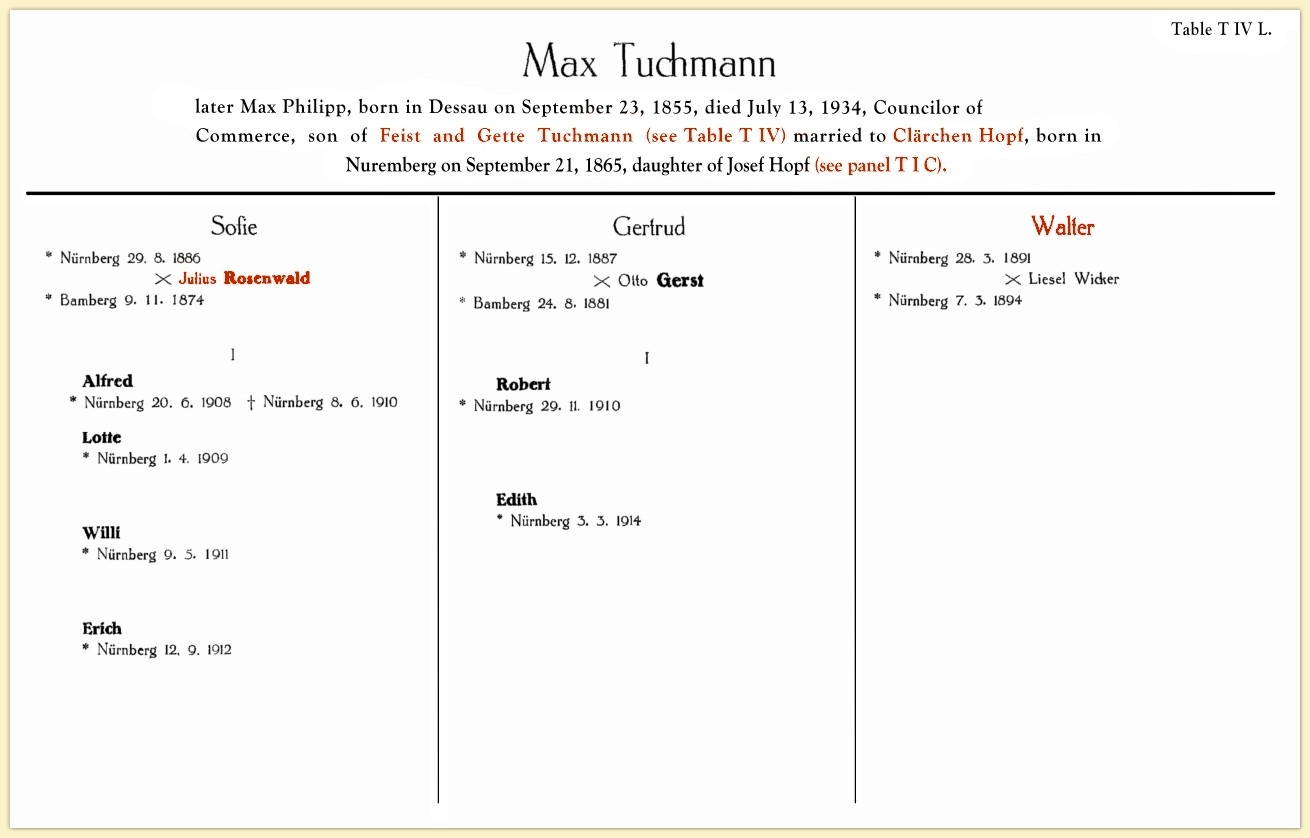
Charles P Stanton updated the Tuchmann genealogies in the 1980s and 90s. The follow‐up for Max Philipp Tuchmann (copy below) is included under his chart for Feist (Philipp) and Gette Tuchmann. Charles P. Stanton Family Collection; AR 25138; MF 734; Box 11 Folder 28 Leo Baeck Institute..
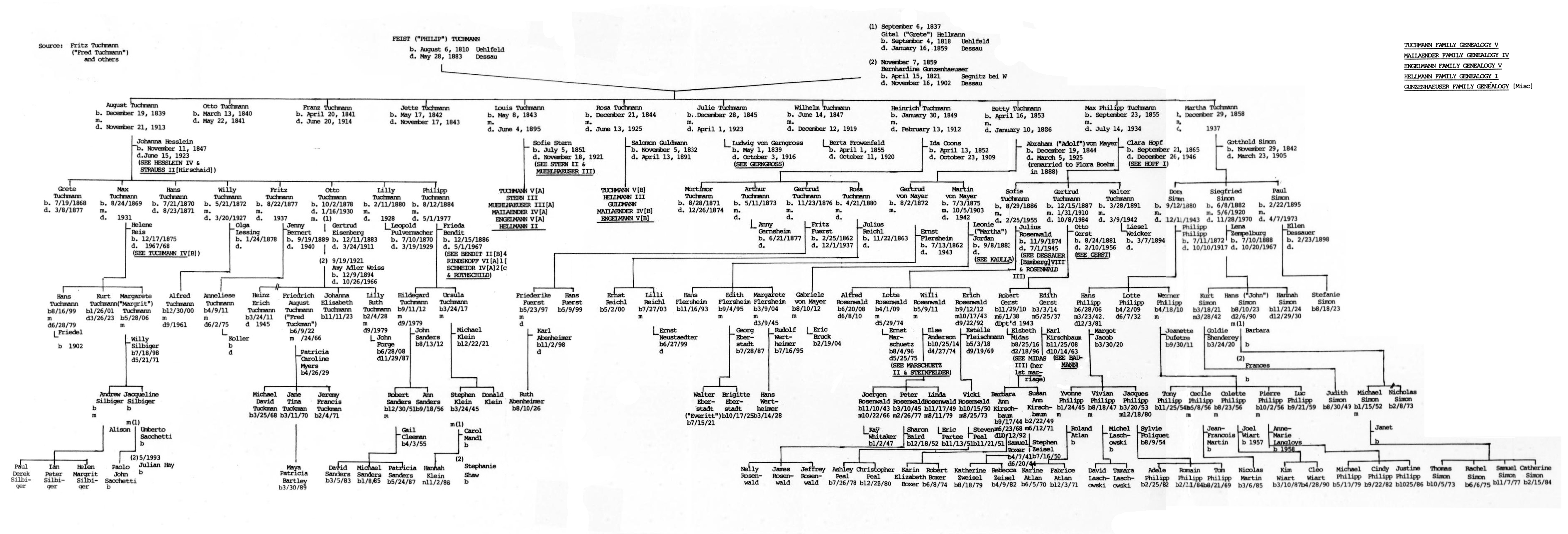
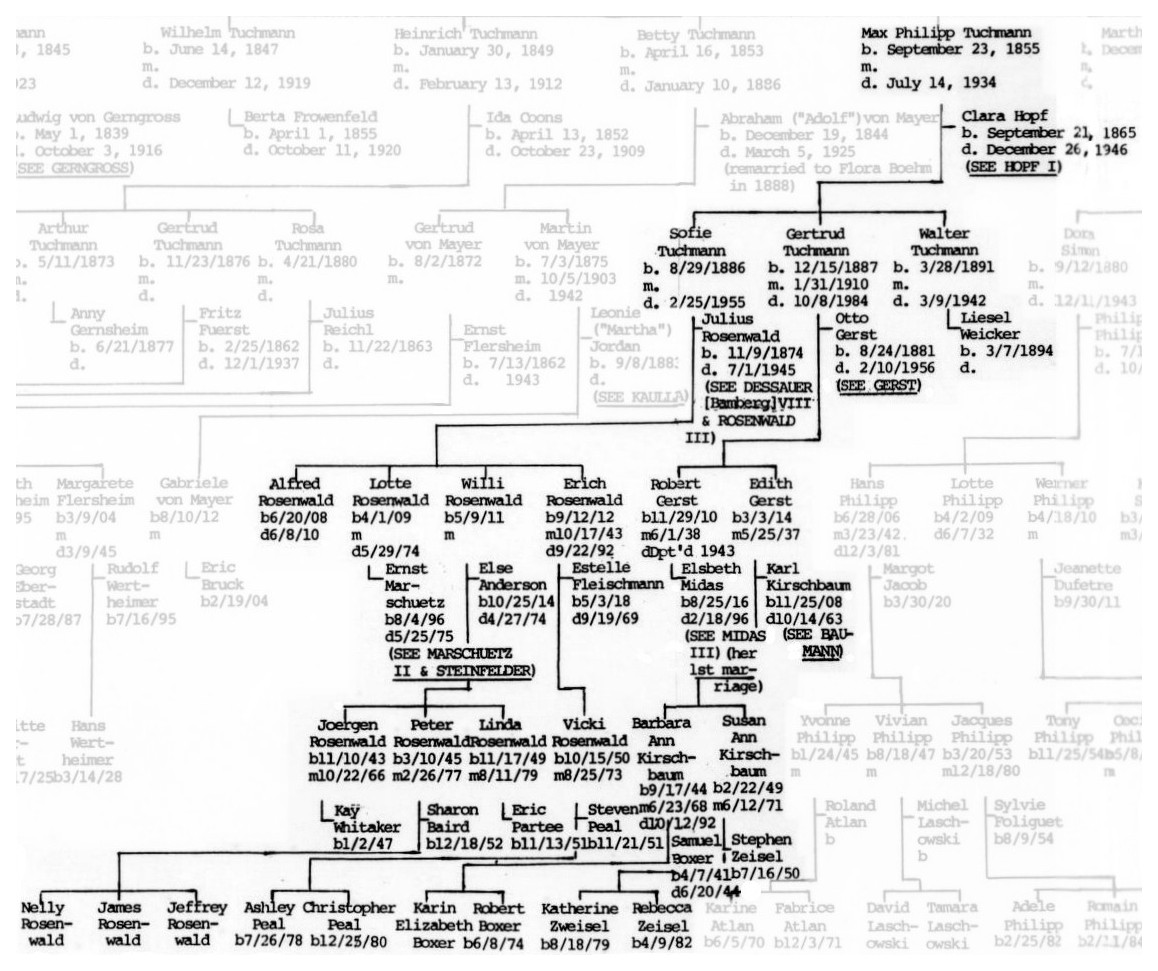
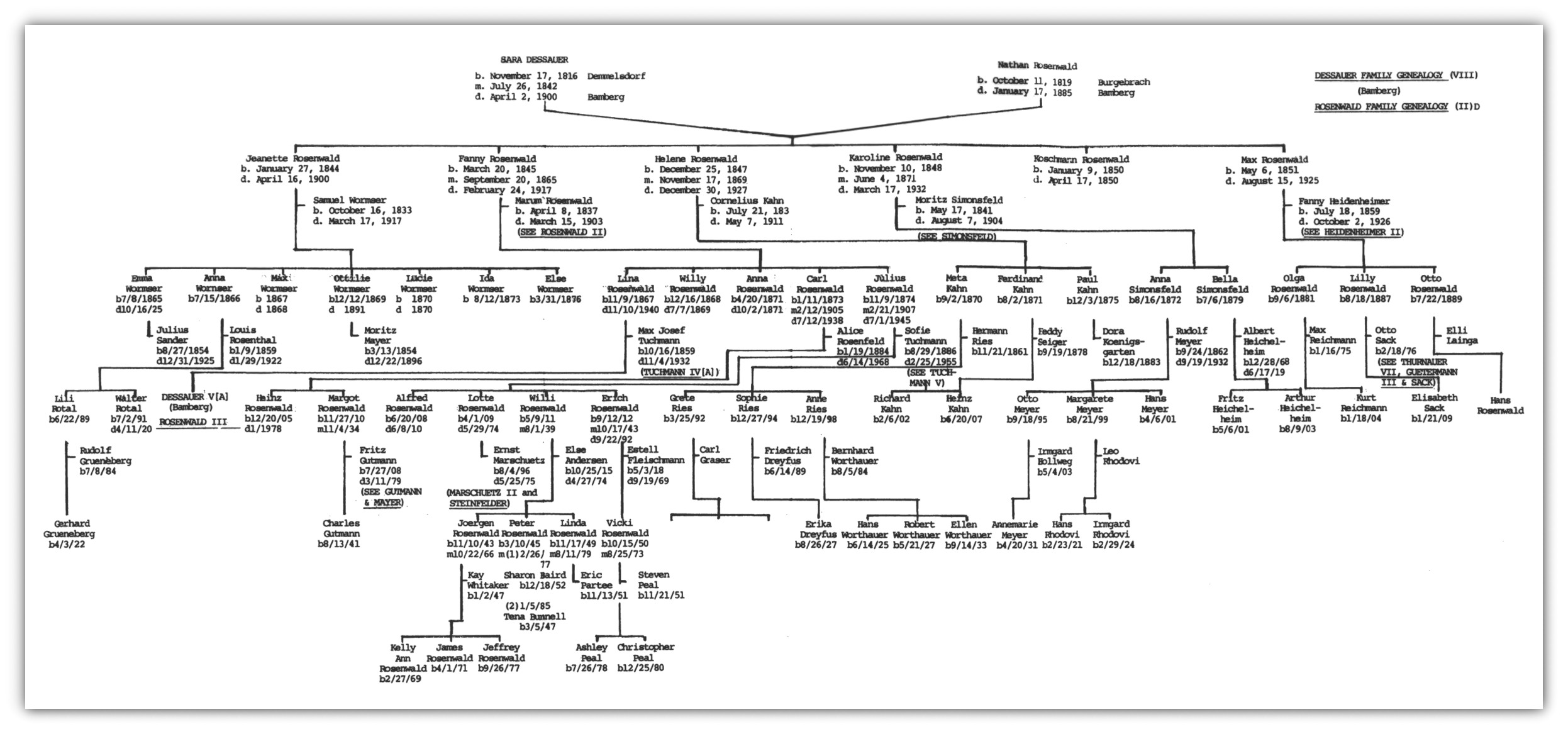
Walter Tuchmann (⁎ Nuremberg
28th March 1891, † Mexico 29th March 1942)
and Liesel Wiecker (⁎ Nuremberg
7th March 1894, † Mexico 21st May 1943)

Walter is listed as "Philipp Walther Tuchmann" in the birth register:
(Stadtarchiv Nürnberg; Nürnberg,
Deutschland; Personenstandsregister Geburtsregister; Bestand: C 27 ⁄ IV; Signatur: C 27 ⁄
IV Nr. 387)
Walter (Philipp Walter Tuchmann) married Liesel Wiecker (Marie Elisabeth Wicker also called Elise) in Nuremberg on
26th October 1921.
(Stadtarchiv Nürnberg; Nürnberg, Deutschland; Personenstandsregister Heiratsregister; Bestand:
C 27 ⁄ III; Signatur: C 27 ⁄ III Nr. 1421 Certificate Number&colon 2302)
Genealogist GW Stern provides citations for Elise: Elise was born in Spalt (Nuremberg 7th March 1894). Spalt is a town
in the district of Roth, in Bavaria, Germany. It is situated 19 km southwest of Schwabach. Spalt is famous for growing hops for
brewing beer. The source citations attached are:
wilmers.ftw (from Jason Hallgarten of Israel ‐ jason@deltathree.com)
Tuchmann.FTW
Floss from Kitty Cooper.FTW
1914 to 1918 World War One
Since most German states had conscription laws, most young men were required to register for military service. At the outset of the First World War, every man in Germany between 17 and 45 years of age was required to perform his mandatory military service.
When Walter, a bachelor age 24 was sworn in on recruitment on 25th August 1915, he was already the manager of the "Drei‐S‐Werk" plant in Schwabach.
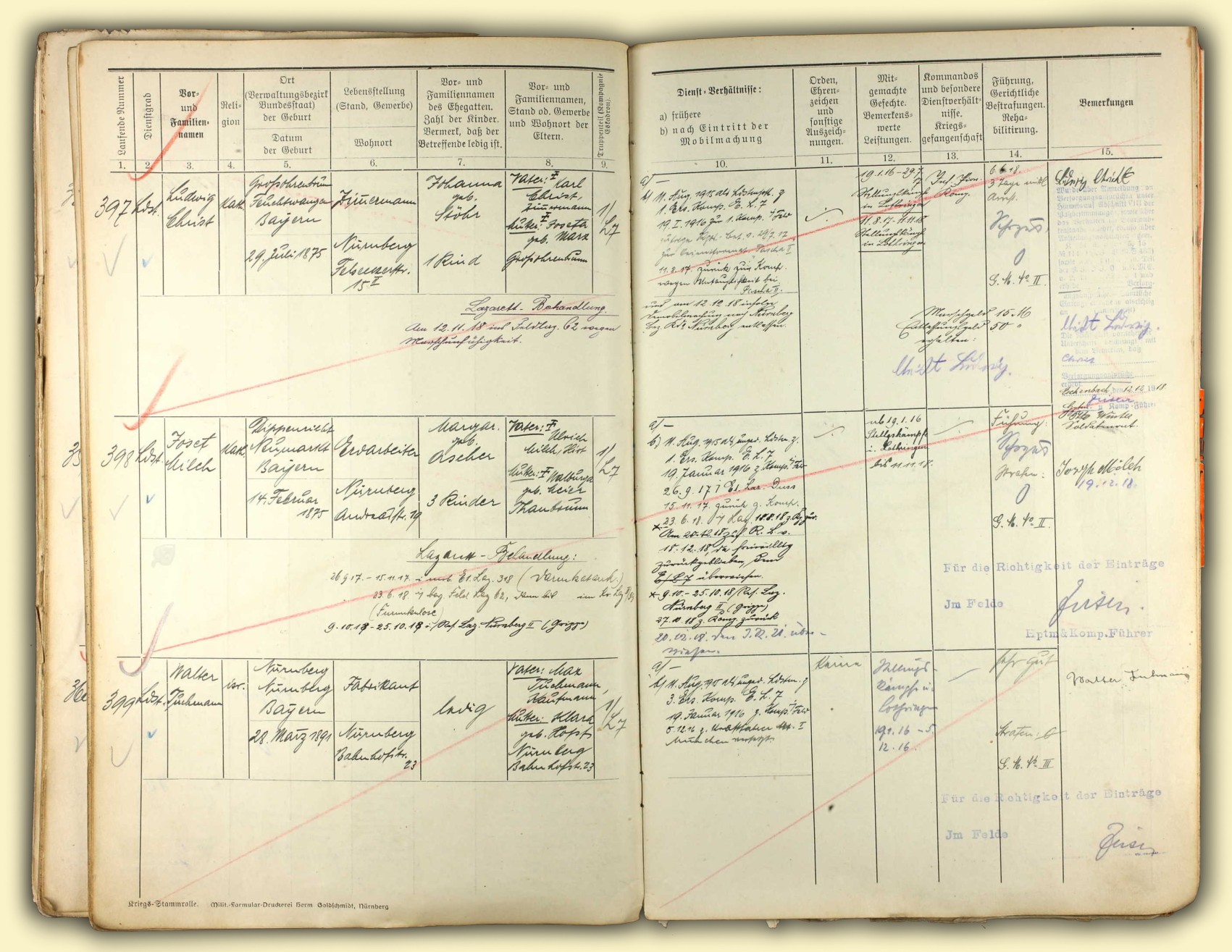
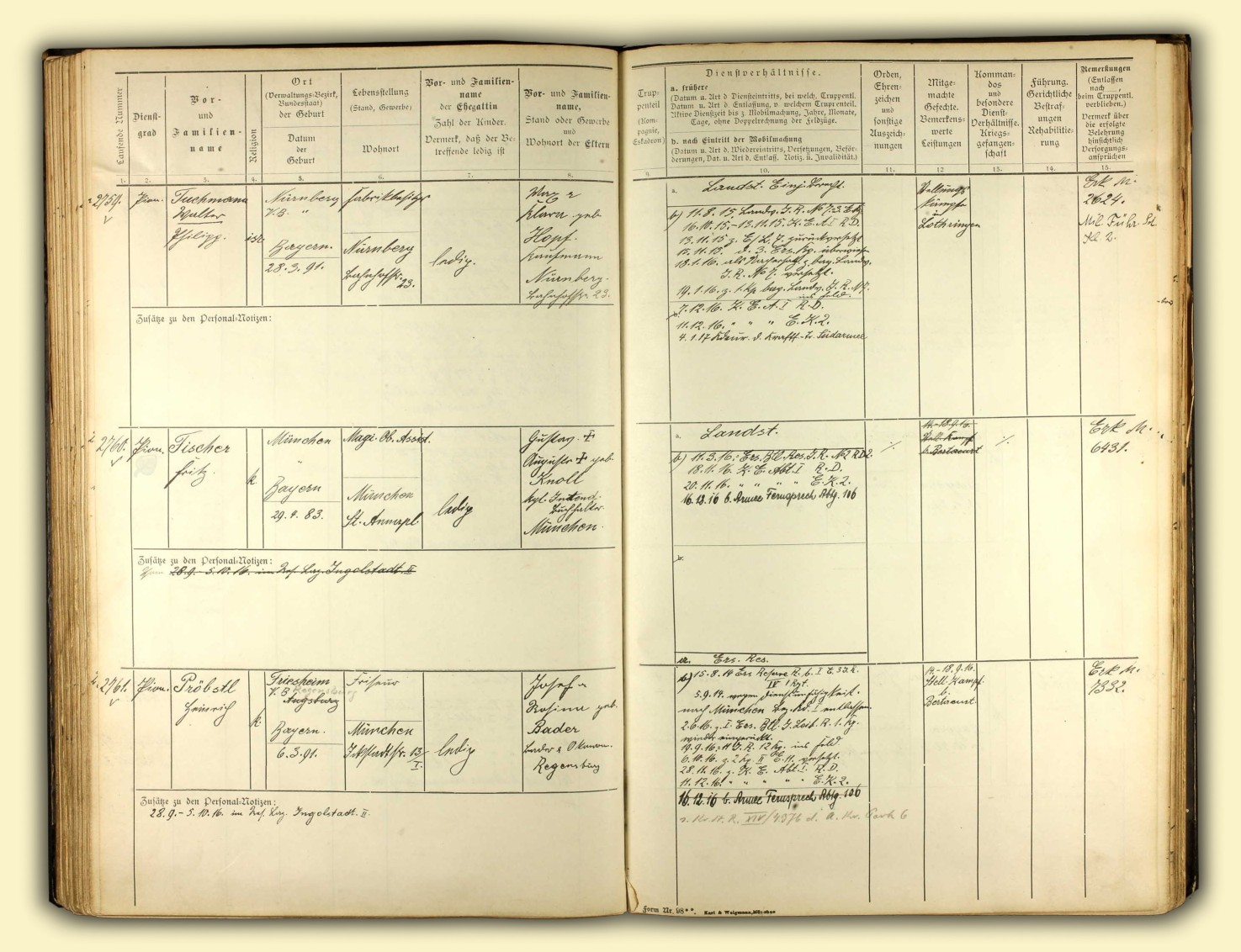
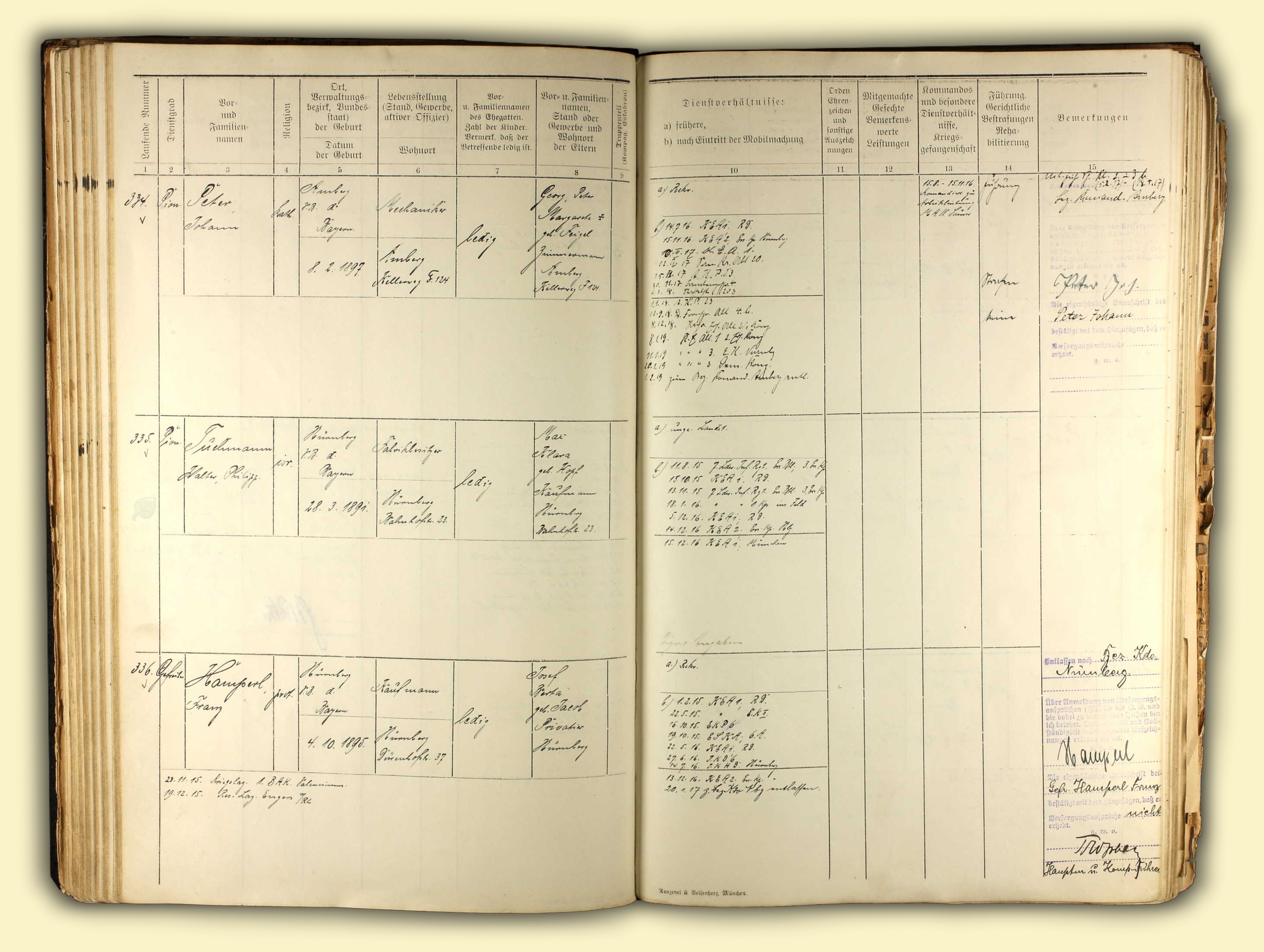
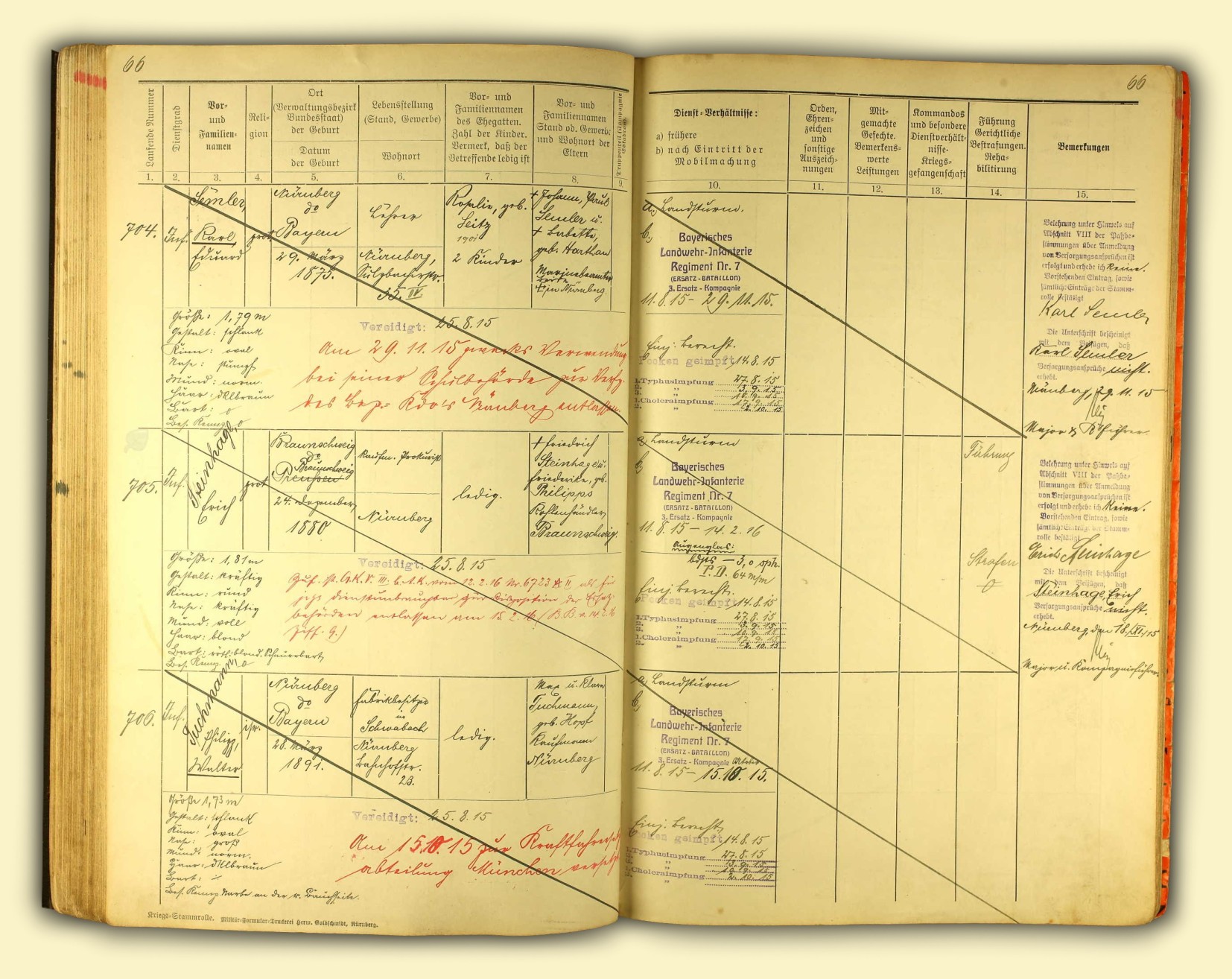
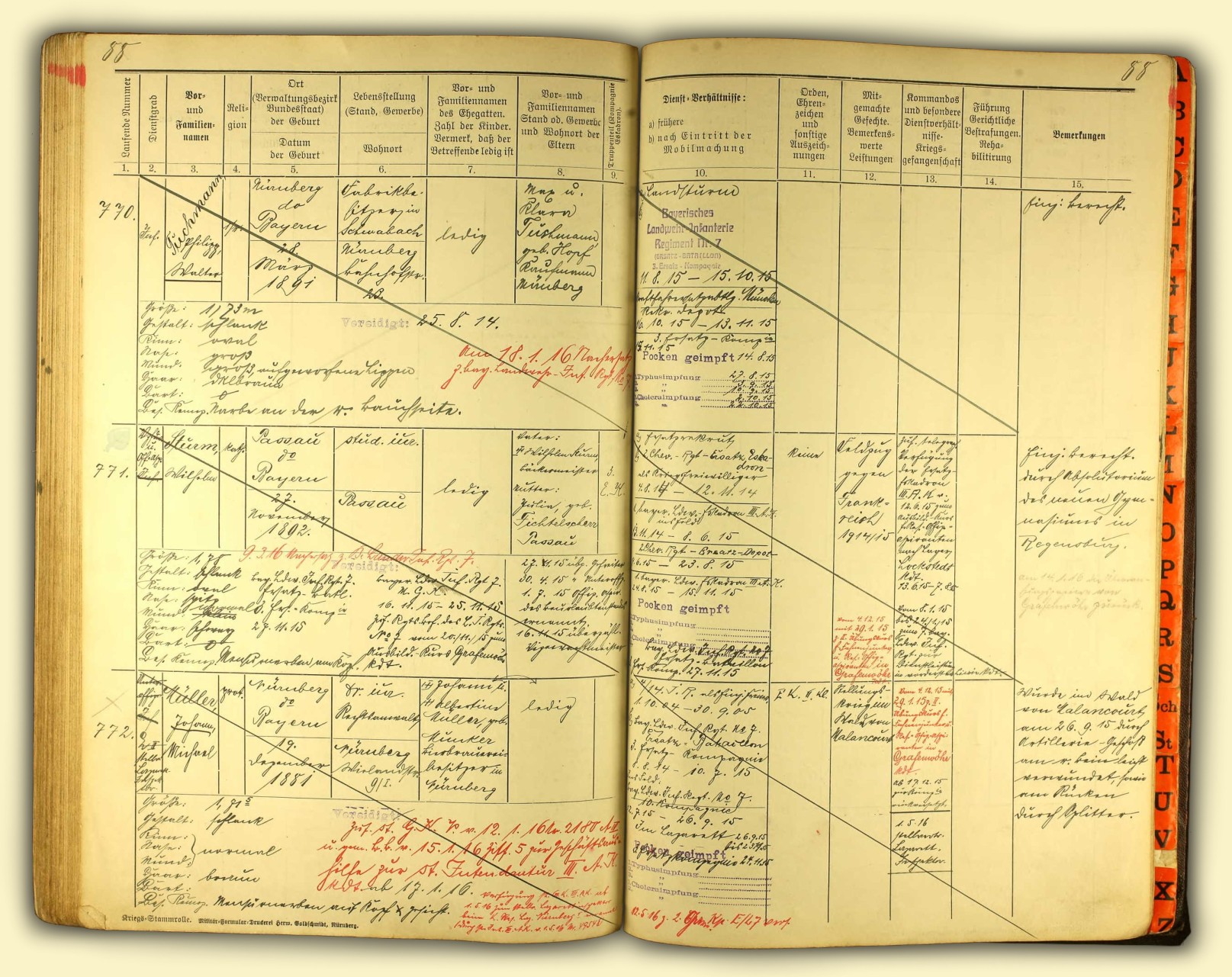
| Transcription | Translation |
31010_178209‐00151 Infanterie Landwehr‐Infanterie‐Regimenter Bayer‐ Landwehr‐Infanterie‐Regiment Nr‐ 7 (Bayreuth) 03702‐ Kriegstammrolle Name: Walter Tuchmann Geburtstag: 28 Mrz 1891 (28 Mar 1891) Geburtsort: Nürnberg Nürnberg Bayern (Bavaria) Kampwaffe: Infanterie Gerätetyp: Landwehr‐Infanterie‐Regimenter Einheit: Bayer. Landwehr‐Infanterie‐Regiment Nr. 7 (Bayreuth) Lautstärke: 9043 |
31010_178209‐00151 Infantry Territorial infantry regiments Bayer Territorial Infantry Regiment No. 7 (Bayreuth) 03702 War Personnel Roster Name: Walter Tuchmann Birth Date: 28 Mar 1891 (28 Mar 1891) Place of birth: Nürnberg Nürnberg Bayern (Bavaria) Combat Arm: infantry Type of Unit: Territorial infantry regiments Unit: Bayer. Territorial Infantry Regiment No. 7 (Bayreuth) Volume: 9043 |
|---|---|
|
31421_BH18827‐00189 Kraftfahr‐Formationen Kraftfahr‐Ersatz‐Abteilungen bayer‐ Kraftfahr‐Ersatz‐Abteilung 01 18827‐ Kriegsstammrolle: Bd‐ 5 Name: Walter Philipp Tuchmana Birth Date: 28 Mrz 1891 (28 Mar 1891) Birth Place: Nürnberg V B Nürnberg Bayern (Bavaria) Combat Arm: Kraftfahr‐Formationen Type of Unit: Kraftfahr‐Ersatz‐Abteilungen Unit: bayer. Kraftfahr‐Ersatz‐Abteilung 01 Volume: 18827 |
31421_BH18827‐00189 Motor vehicle formations Motor vehicle replacement departments Bayer Motor Vehicle Replacement Department 01 18827‐ War Tribe Roll: Vol‐ 5 Name: Walter Philipp Tuchmana Birth Date: 28 Mar 1891 (28 Mar 1891) Birth Place: Nürnberg V B Nürnberg Bayern (Bavaria) Combat Arm: Motor vehicle formations Type of Unit: Motor vehicle replacement departments Unit: bayer. Motor vehicle replacement department 01 Volume: 18827 |
|
31421_BH18889‐00125 Kraftfahr‐Formationen Kraftfahr‐Ersatz‐Abteilungen bayer‐ Kraftfahr‐Ersatz‐Abteilung 03 18889‐ Kriegsstammrolle: Bd‐ 1 Name: Walter Philipp Tuchmann Birth Date: 28 Mrz 1891 (28 Mar 1891) Birth Place: Nürnberg V B Nürnberg Bayern (Bavaria) Combat Arm: Kraftfahr‐Formationen Type of Unit: Kraftfahr‐Ersatz‐Abteilungen Unit: bayer. Kraftfahr‐Ersatz‐Abteilung 03 Volume: 18889 |
31421_BH18889‐00125 Motor vehicle formations Motor vehicle replacement departments Bayer Motor Vehicle Replacement Department 03 18889‐ war log: vol‐ 1 Name: Walter Philipp Tuchmann Date of birth: March 28, 1891 (March 28, 1891) Place of birth: Nürnberg V B Nürnberg Bayern (Bavaria) Combat Arm: Motor vehicle formations Unit type: Motor vehicle replacement departments Unit: Bavarian. Motor vehicle replacement department 03 Volume: 18889 |
|
31433_bh09043‐00068 Infanterie Ersatztruppenteile der Landwehr‐Infanterie‐Regimenter bayer‐ Landwehr‐Infanterie‐Regiment No‐07 (Nürnberg) Ersatz‐Bataillon 09043‐ Kriegsstammrolle: Bd‐3 Name: Philipp Walter Tuchmann Birth Date: 28 Mrz 1891 (28 Mar 1891) Birth Place: Nürnberg Nürnberg Bayern (Bavaria) Combat Arm: Infanterie Type of Unit: Ersatztruppenteile der Landwehr‐Infanterie‐Regimenter Unit: bayer. Landwehr‐Infanterie‐Regiment No. 7 (Nürnberg) Ersatz‐Bataillon Volume: 9043 |
31433_bh09043‐00068 infantry Replacement troops of the Landwehr infantry regiments Bavarian Landwehr Infantry Regiment No‐07 (Nuremberg) Replacement battalion 09043‐ War Tribe Roll: Vol‐3 Name: Philipp Walter Tuchmann Birth Date: 28 Mar 1891 (28 Mar 1891) Birth Place: Nürnberg Nürnberg Bayern (Bavaria) Combat Arm: Infantry Type of Unit: Replacement units of the Landwehr infantry regiments Unit: bayer. Landwehr Infantry Regiment No. 7 (Nuremberg) replacement battalion Volume: 9043 |
|
31433_bh09043‐00090 Infanterie Ersatztruppenteile der Landwehr‐Infanterie‐Regimenter bayer‐ Landwehr‐Infanterie‐Regiment No‐07 (Nürnberg) Ersatz‐Bataillon 09043‐ Kriegsstammrolle: Bd‐3 Name: Philipp Walter Tuchmann Birth Date: 28 Mrz 1891 (28 Mar 1891) Birth Place: Nürnberg Nürnberg Bayern (Bavaria) Combat Arm: Infanterie Type of Unit: Ersatztruppenteile der Landwehr‐Infanterie‐Regimenter Unit: bayer. Landwehr‐Infanterie‐Regiment No. 7 (Nürnberg) Ersatz‐Bataillon Volume: 9043 |
31433_bh09043‐00090 infantry Replacement troops of the Landwehr infantry regiments Bavarian Landwehr Infantry Regiment No‐07 (Nuremberg) Replacement battalion 09043‐ War Tribe Roll: Vol‐3 Name: Philipp Walter Tuchmann Birth Date: 28 Mar 1891 (28 Mar 1891) Birth Place: Nürnberg Nürnberg Bayern (Bavaria) Combat Arm: Infantry Type of Unit: Replacement units of the Landwehr infantry regiments Unit: bayer. Landwehr Infantry Regiment No. 7 (Nuremberg) replacement battalion Volume: 9043 |
Schwabach
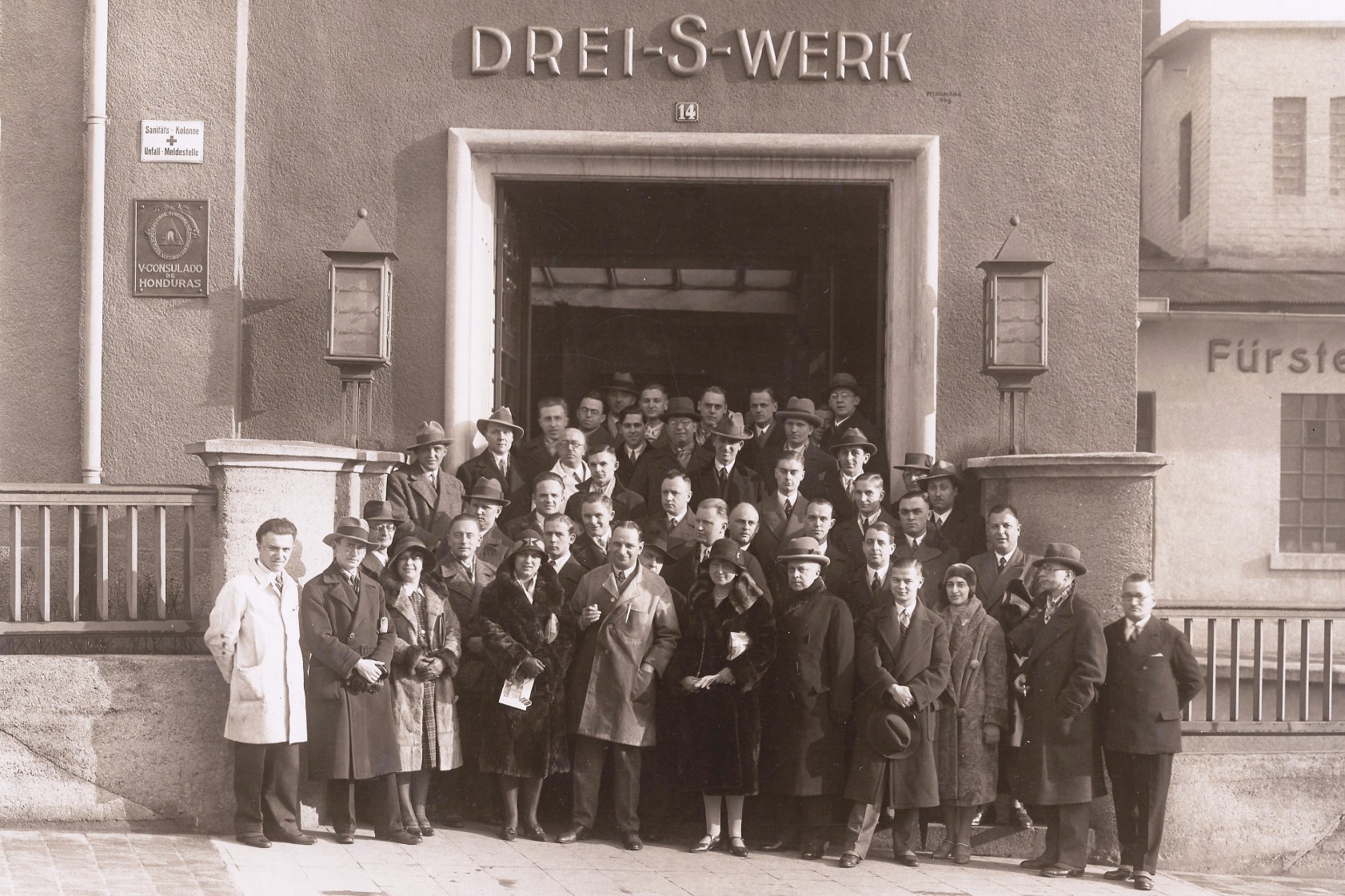
In Schwabach a city close to Nuremberg stood the well‐known "Drei‐S‐Werk". Aside from other metal products, they produced grammophone needles.
The company, which was founded in 1850, had been the world market leader in textile needle systems for decades. A second division produced precision standard parts. The metal processing company employed 134 people.
The Bechmann families lived there one after the other (probably until 1884), when the then owners Friedrich Bechmann and his son Georg Reingruber (needle manufacturer), sold it on to Walter Tuchmann. After the Tuchmann couple, the family of the general partner of the Drei‐S‐Werk limited partnership, Herbert J. Schmauser, lived in the building from 1938 until 1954. In 1955 the apartment was converted into an office and the attic apartment became a registry. It stayed that way until the company moved into its new building in Neuendettelsau in 2008.
Tuchmann sole owner
Because of the fact that in addition to the production of gramophone needles the diversifying into non‐branch items such as mattress springs caused the Reingruber company to get into financial difficulties. So it came about that the partner, Commerce Councilor Max Philipp Tuchmann, Walter's father, became the sole owner of the factory in 1913.
The outbreak of the First World War presented the company with new, difficult tasks. Important foreign relations suddenly came to an end and the production of gramophone needles subsided. So the decision was made to manufacture spinning needles. From then on, the company was called "Schwabacher Spinnereinadel‐ und Stahlspitzenwerk", or "Drei‐S‐Werk" for short.
 At this point in time, Walter Tuchmann, the son of the Commerce Councilor, was the owner of the company. The large product range of
gramophone needles at the time of Tuchmann is reflected in the needle boxes.
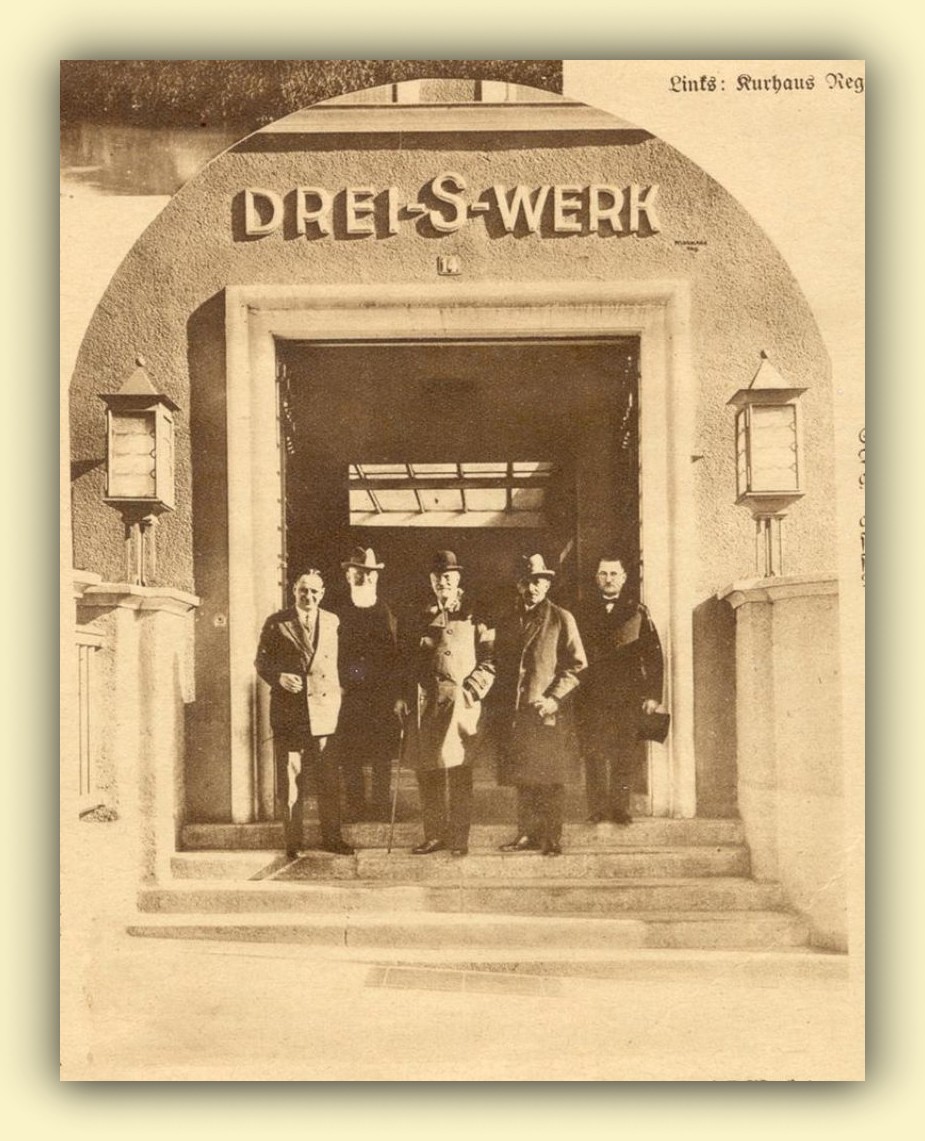
Walter Tuchmann, the Honorary Consul of Honduras, was very popular as the head of the company. People from home and abroad visited the Schwabach factory. In 1928, for example, the Nürnberger Illustrierte published a photo of Walter Tuchmann and Prince Alfons of Bavaria visiting the Schwabach Drei‐S‐Werk.
Escape from the Nazis
At that time the company had around 130 employees. In the so‐called "Third Reich", Tuchmann suffered reprisals due to his Jewish descent. According to the "Nuremberg Laws" he was accused of racial disgrace. Foreign exchange offenses were also blamed on him. This led to his selling the factory to a limited partnership. In 1937 he emigrated first to Prague, and after the aryanization of the company to New York and on to Mexico where he passed away on 29th March 1942. Elise his wife also spent her last years in Mexico City and passed away the following year 21st May 1943 RIP.
The company consisted of the limited partners Richard Schmauser, Herbert J. Schmauser and Dr. Ing.Otto Wiedemeyer. At that time the company had 87 workers. During the Second World War, the company was forced to manufacture materials essential to the war effort.
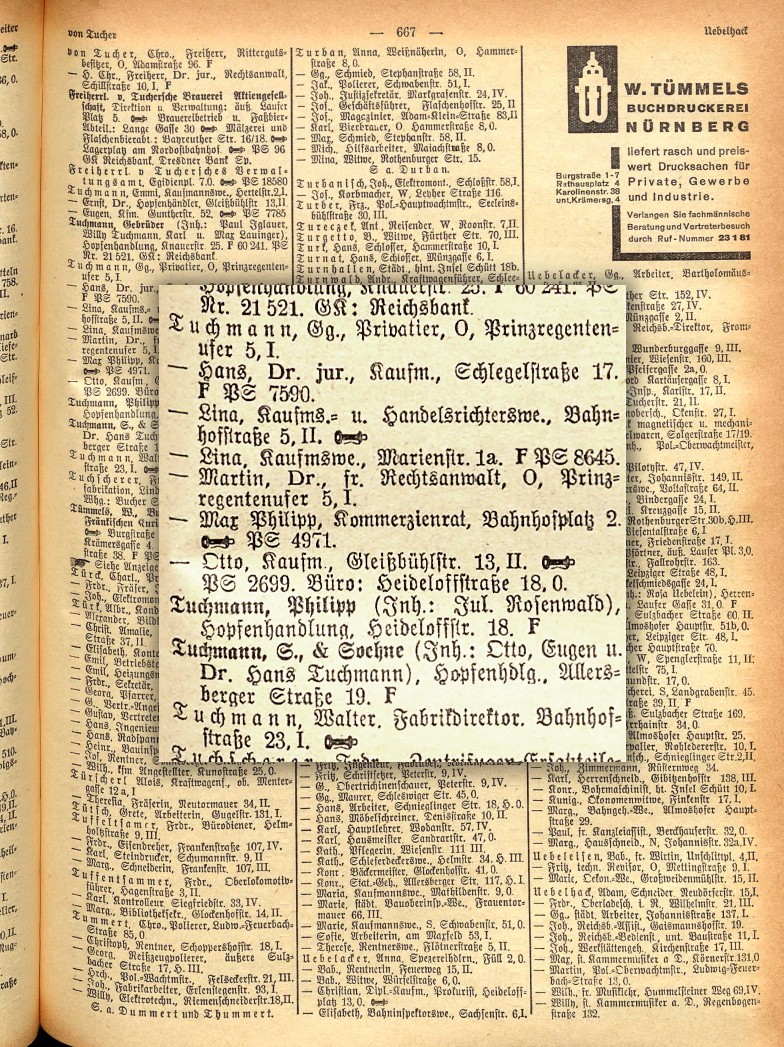
Residence ‐ Walter and Elise in the 1930s
| Name: | Walter. Fabrikdirektor. Bahnhos sftaße 2 (Bahnhofstraße 23) Tuchmann |
| Residence Date: | 1935 |
| Residence Place: | Nürnberg, Deutschland (Germany) |
| Title | Einwohnerbuch Nürnberg (Nurnberg Residents' Book) |
| Walter. Fabrikdirektor. Bahnhofstraße 23 Tuchmann in the Germany and Surrounding Areas, Address Books, 1815‐1974 | |
|
Deutsche National Bibliothek; Leipzig, Deutschland; Publisher: Tümmels Buchdruckerei; Signatur: ZC 3176;
Laufende Nummer: 3 Ancestry link |
|

An aerial view of leafy Marienvorstadt, the southeastern extramural area of Nuremberg City, concieved in the 1860s, showing Walter and Elise's apartment residence on Bahnhofstraße 23 in 1927. Of all in the photograph, only one or two buildings remain today after the devastation of the allied bombing in WW2. The 1894 Hopf residence in the middle top left of the photograph in Blumenstraße a survivor and is now the Kunstvilla Museum.
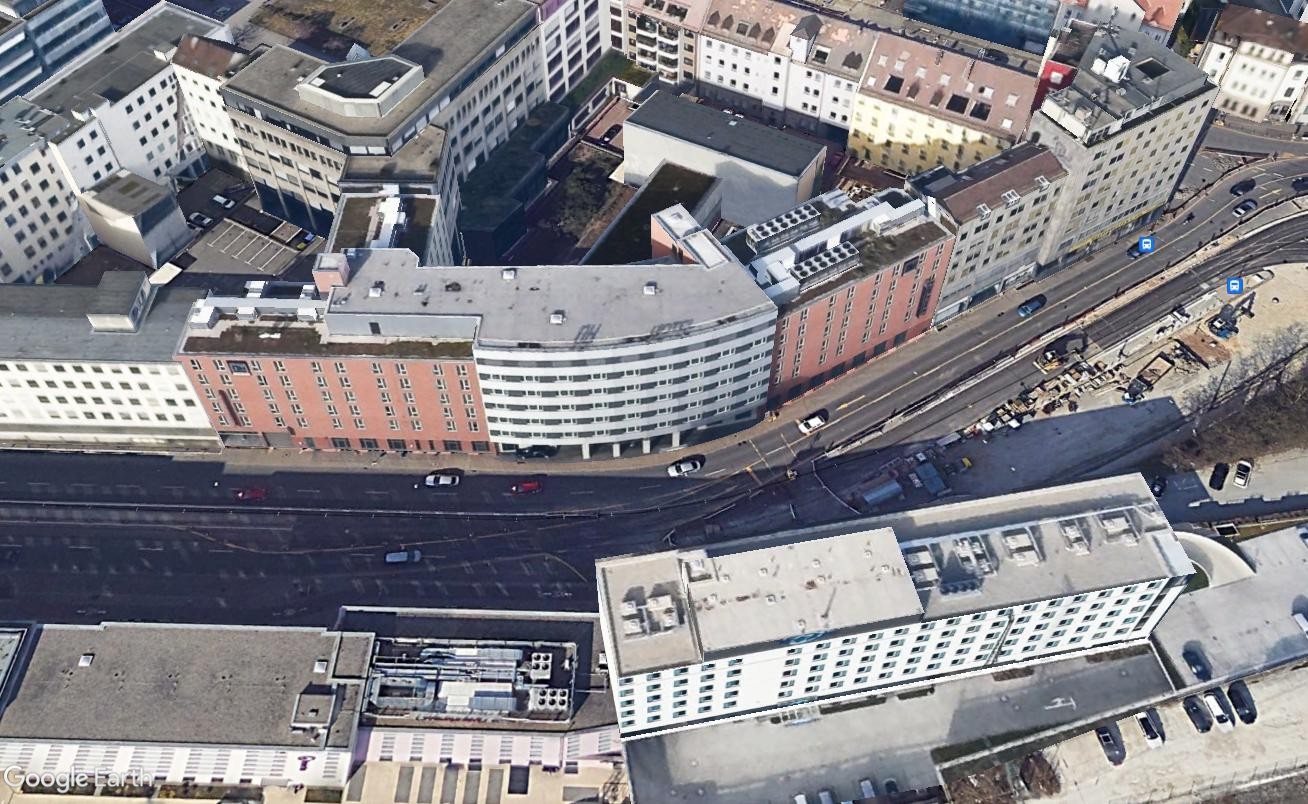
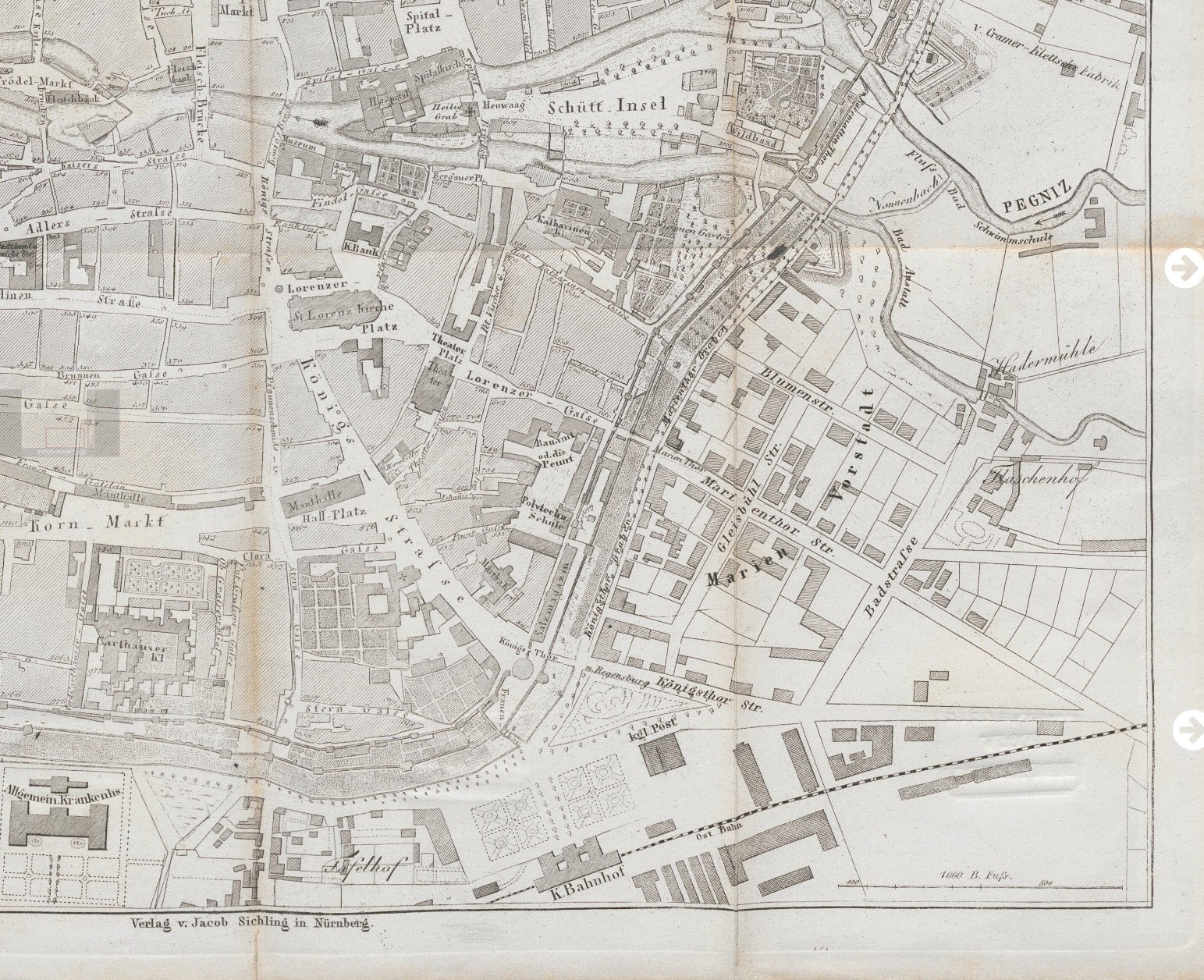
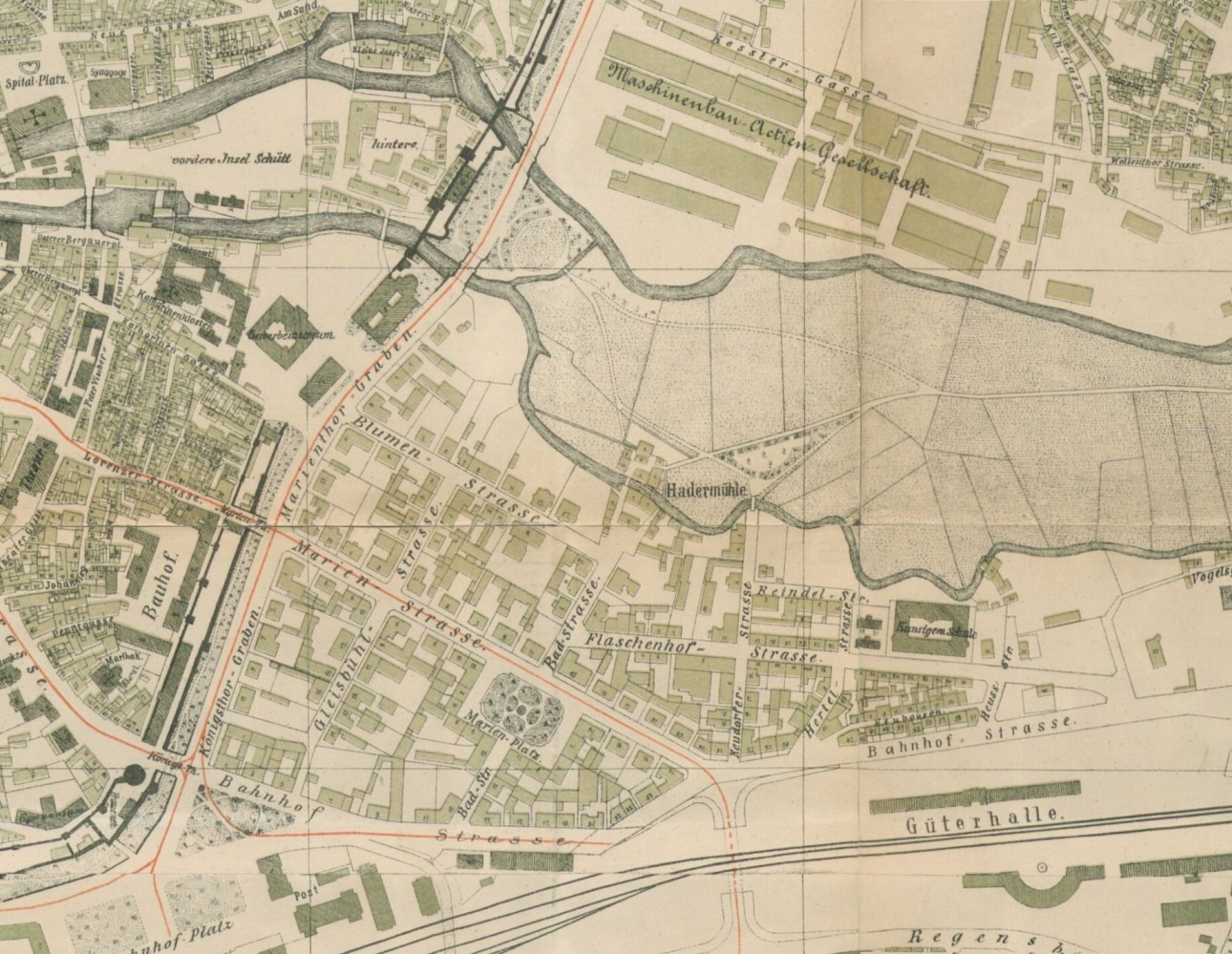
Coincidentally, and on a personal note, when we visited Nuremberg briefly in 2015 we stayed in an hotel, quite by chance, on Bahnhofstraße, opposite where number 23, Walter and Elise's residence would have stood. My mother and siblings were brought up on Bad Strasse, roughly in the centre of the aerial view, before they moved to their new house in Erlenstegen around 1930. Above are maps of the Marienvorstadt area and a photo of todays bland boxes that have replaced the few remaining elegant apartment residences. Even our hotel is gone!
Prague, Belgium, Rotterdam, New York, Mexico City
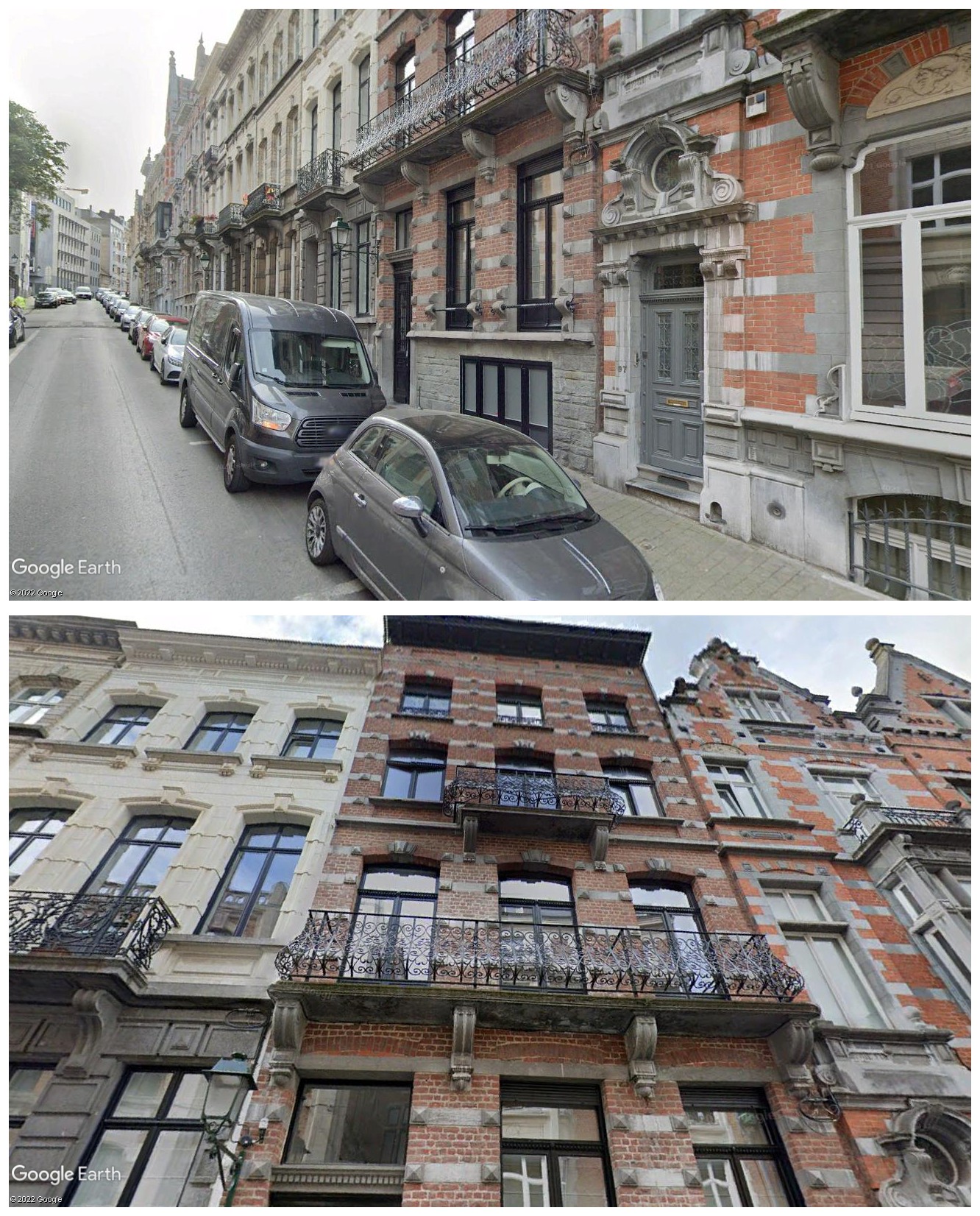 According to one account, Walter and Elise fled to Prague at the end of July in 1937. Leaving from Rotterdam, Holland and bound for New York
in December 1939, with Panama as their planned destination, the manifest of the SS Veendam for immigration inspection tells us that their last address was in
Brussels, Belgium, staying with their friend:
Mrs A Hooper
99 Rue de la Source
Brussels
Belgium
Not to say that prior to this time Walter and Elise hadn't travelled abroad much, but to date, there's no record to be found of any other international journeys for them apart from the following papers. It seems likely to me that Walter would have been widely travelled in Europe for business reasons.
My Tuchmann grandfather and family (apart from my mother, who had already exited to London by 1937) also made their exodus via Prague
where they gathered together from various 'holidays' at a boarding house called Hotel Sarka.. This account from my late Uncle
Max-Lorenz:
"At this time, anti‐semitism began in Germany, which spoilt many of our plans ‐ scholastic and social ‐ and it was only a
question of time, how dangerous life for us in Germany would become, and my father was forced to think seriously about emigration.
The emigration was planned in all details for the sumner of 1937. It was also decided to spend six months in Prague, a period of time which
the English Authorities would need for the investigation of our names and circumstances. Guest‐house Sarka, no. 8 Soborska, as a matter
of fact with an outlook onto the historically significant Sarka, known through the Dvorak cycle (I can't arrive at any other
translation) and scenically pleasant."

New York
The Nazis had reached Prague, invading by March 15, 1939 ‐ March 16, 1939. Walter and Elise would have long been with Mrs Hooper in Belgium by then, perhaps planning their route onwards to Panama. By Christmastime, on the 8th of December 1939, the couple embarked from Rotterdam on the SS Veendam, heading for New York. Rotterdam was heavily bombed by the Luftwaffe in May of 1940 during which the SS Veendam was severly damaged.

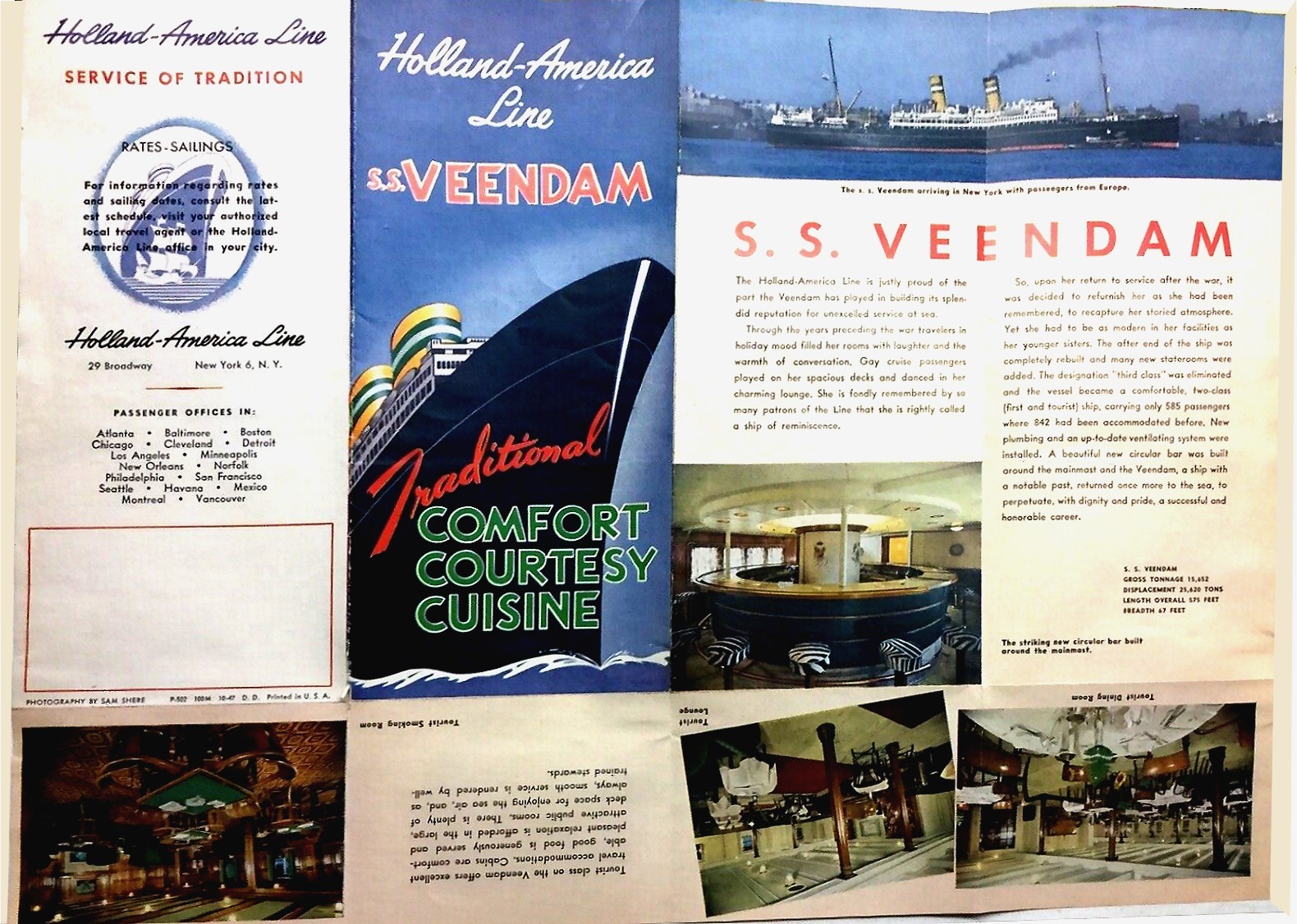
About the SS Veendam
Built by Harland & Wolff Limited, Govan, Scotland, 1923. 15,450 gross tons; 579 (bp) feet long; 67 feet wide.
Steam Turbine engines, twin screw. Service speed 15 knots.
Ship History
Built for Holland ‐ America Line, Dutch flag, in 1923 and named Veendam. Rotterdam‐New York service. Damaged by fire
during the German invasion of Holland in May 1940.
Broken up at Baltimore in 1953.

Ship's Manifest, columms 1 to 15

Ship's Manifest, columms 16 to 37
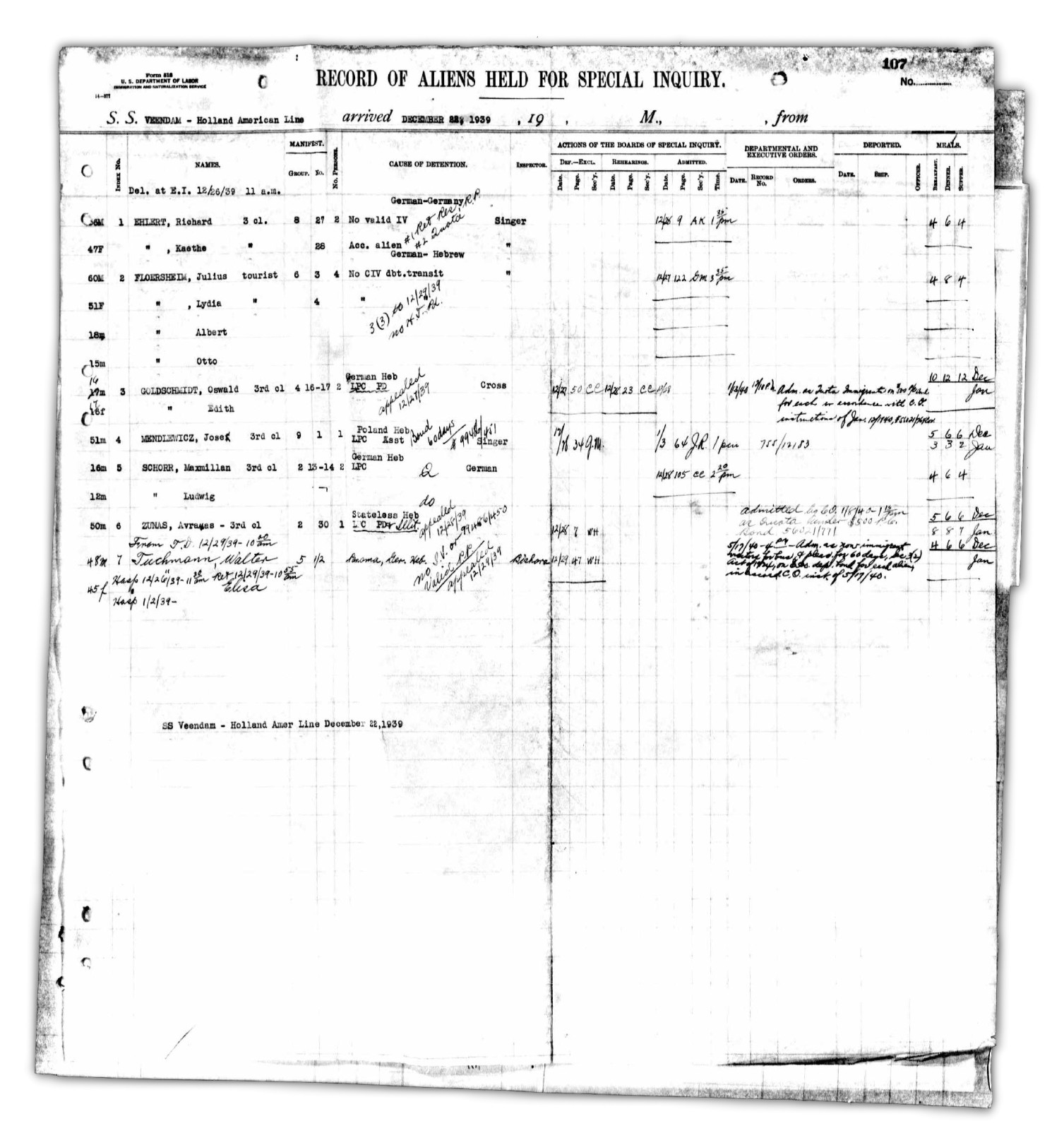
Records of Aliens Held for Special Inquiry
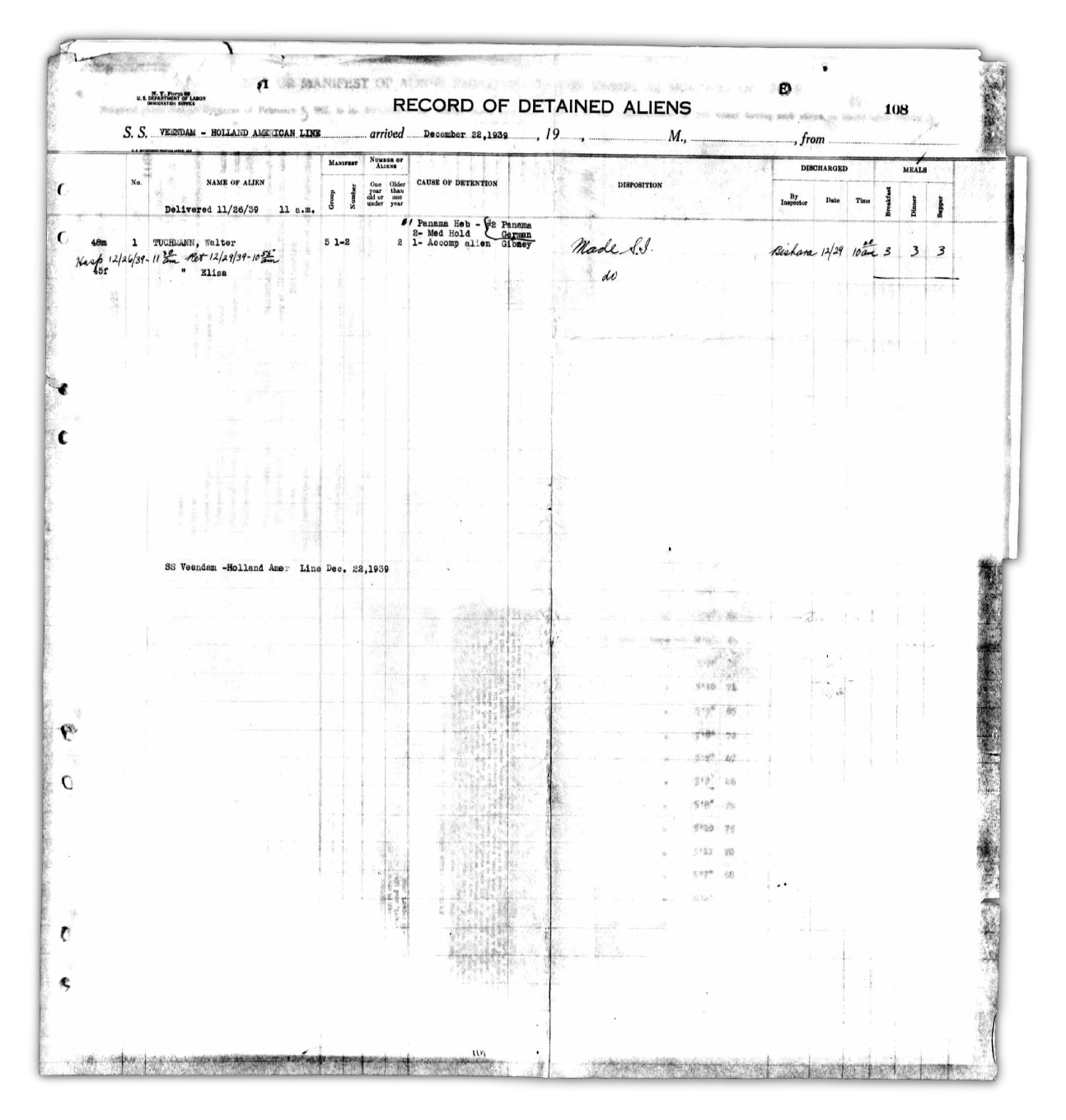
Record of Detained Aliens
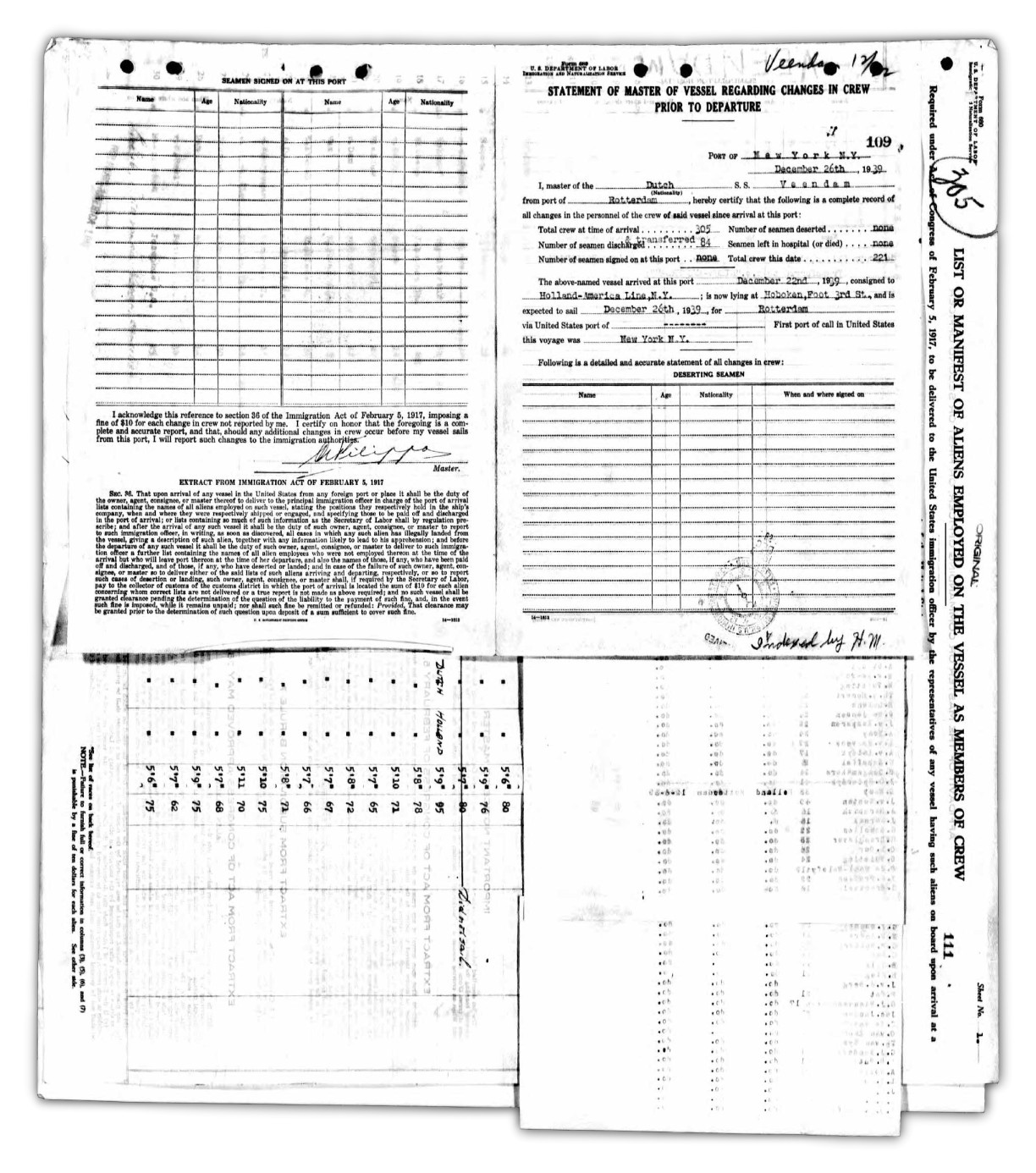
The SS Veendam Master's Statement
Passenger and Crew Lists of Vessels Arriving at New York, New York, 1897‐1957. Microfilm Publication T715, 8892 rolls. NAI: 300346. Records of the Immigration and Naturalization Service; National Archives at Washington, D.C.
Supplemental Manifests of Alien Passengers and Crew Members Who Arrived on Vessels at New York, New York, Who Were Inspected for Admission, and Related Index, compiled 1887‐1952. Microfilm Publication A3461, 21 rolls. NAI: 3887372. RG 85, Records of the Immigration and Naturalization Service, 1787‐2004; Records of the Immigration and Naturalization Service; National Archives, Washington, D.C.
NYT715_6428‐0795
Name: Walter Tuchmann
Gender: Male
Ethnicity/ Nationality: Hebrew
Marital status: Married
Age: 48
Birth Date: abt 1891
Birth Place: Germany
Other Birth Place: Nuremblrg
Last Known Residence: Brussels, Belgium
Departure Port: Rotterdam, Netherlands
Arrival Date: 22 Dec 1939
Arrival Port: New York, New York, USA
Final Destination: Panama
Years in US: 60 Days
Height: 5 Feet, 11 Inches
Hair Color: Gray
Eye Color: Gray
Complexion: Fair
Person in Old Country: Mrs. A. Hooper
Person in Old Country Relationship: Friend
Person in Old Country Residence: Brussels, Belgium
Person in US: Karl Kirschbaum
Ship Name: Veendam
NYT715_6428‐0923
Date 1939 Dec 22 Veendam
Name: Walter Tuchmann
Gender: Male
Age: 48
Birth Date: abt 1891
Arrival Date: 22 Dec 1939
Arrival Port: New York, New York, USA
Ship Name: Veendam
NYT715_6428‐0924
Name: Walter Tuchmann
Gender: Male
Age: 48
Birth Date: abt 1891
Arrival Date: 22 Dec 1939
Arrival Port: New York, New York, USA
Ship Name: Veendam
Hard to imagine the distress for Walter and 'Elisa Maria' as they were detained when they reached New York by Immigration inspectors. Listed as 'In Transit' to Panama on the manifest, they both somehow held Panamanian passports. 'Transits' had to show they had tickets for transportation beyond the United States, but Walter and Elise had no Visas and their passports were deemed invalid for US entry and for those reasons they were held and reported on the 'Record of Aliens held for Special Inquiry' category. Interesting that Walter's occupation is listed on the manifest as 'Consul', possibly a continuence of his official earlier role in Schwabach as a Consul of the Honduras. Nevertheless, his and Elise's credentials were deemed invalid and for the week or so that followed, they were placed 'on hold'.
The manifest is stamped with 'IN HOSPITAL' along with the later
'DISCHARGED'
 with the accompanying handwritten addition 'No IV or Valid Passport appealed 29 12 1939'
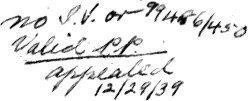 (IV ‐ Immigration Visa). Elise and Walter were likely very much aware about the risks and the
increasing restrictions on US Immigration in late 1939. The 'IN HOSPITAL' is overwritten with
'Med? hold mental' and it's my opinion that the
circumstances caused enough distress to Elise and Walter to warrant a possible admission to hospital with their detention for a few days over
the 1939‐1940 new year:
Interesting to note that the Shipping Line company (in this case Holland‐America Line) rather than the US Immigration services, would have been made responsible for any deportations and for costs incurred during detentions; for example, meals. This is why the meals are listed for Walter and Elise and they are: 3 breakfasts, 3 dinners and 3 suppers.
To summarise:
Walter and Elise, age 48 and 45, left Rotterdam on the SS Veendam on 8th December 1939.
They arrived in New York on 22nd December 1939.
With no valid Immigration Visa and Panamanian Passports, they were detained by the Immigration Authorities
 With mental issues, Elise
was admitted to Hospital at 11:30am on 26th December
Walter returning at 10:55am on 29th December and again on 2nd January 1940 (1939 written in error).
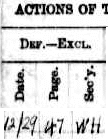
The initial conclusion of the Boards of Special Inquiry indicated their decision by dating the DEP. EXCL. (Deport Exclude)
column with the date 12/29, Page 47, Sec'y WH (Secretary's Initials).
On the same date, 29th December 1939, they appealed to the Board of Special Inquiry against the board's decision.
Again, on 29th December 1939, the Board of Special Inquiry's decision to deport or exclude was rescinded and concluded as follows:
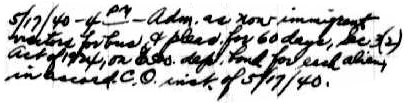 17th May 1940 ‐ 4pm. Admitted as non immigrant visitors for business and pleasure for
60 days, Sec 3(2) Act of 1924, on $500 deposit bond for each alien "in accord C.O. inst" of 17th May 1940.
Definition of 'Immigrant.'
Sec. 3. When used in this Act the term 'immigrant' means any alien departing from any place outside the United States destined for the United States, except (1) a government official, his family, attendants, servants and employees, (2) an alien visiting the United States temporarily as a tourist or temporarily for business or pleasure, (3) an alien in continuous transit through the United States, (4) an alien lawfully admitted to the United States who later goes in transit from one part of the United States to another through foreign contiguous territory, (5) a bona fide alien seaman serving as such on a vessel arriving at a port of the United States and seeking to enter temporarily the United States solely in the pursuit of his calling as a seaman, and (6) an alien entitled to enter the United States solely to carry on trade under and in pursuance of the provisions of a present existing treaty of commerce and navigation.
The SS Veendam
Cruising on the SS Veendam
Immigration to the US
US Immigration in the 1930s
US Government ‐ Passenger Manifest Annotations
jewishgen ‐ Passenger Manifest Annotations
jewishgen ‐ More on Passenger Manifest Annotations
Karl Eugen Kirschbaum
25th November 1908 to 12th October 1963
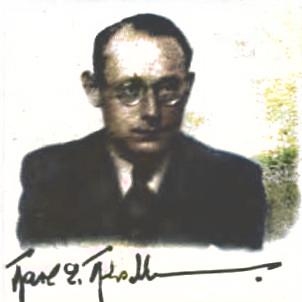
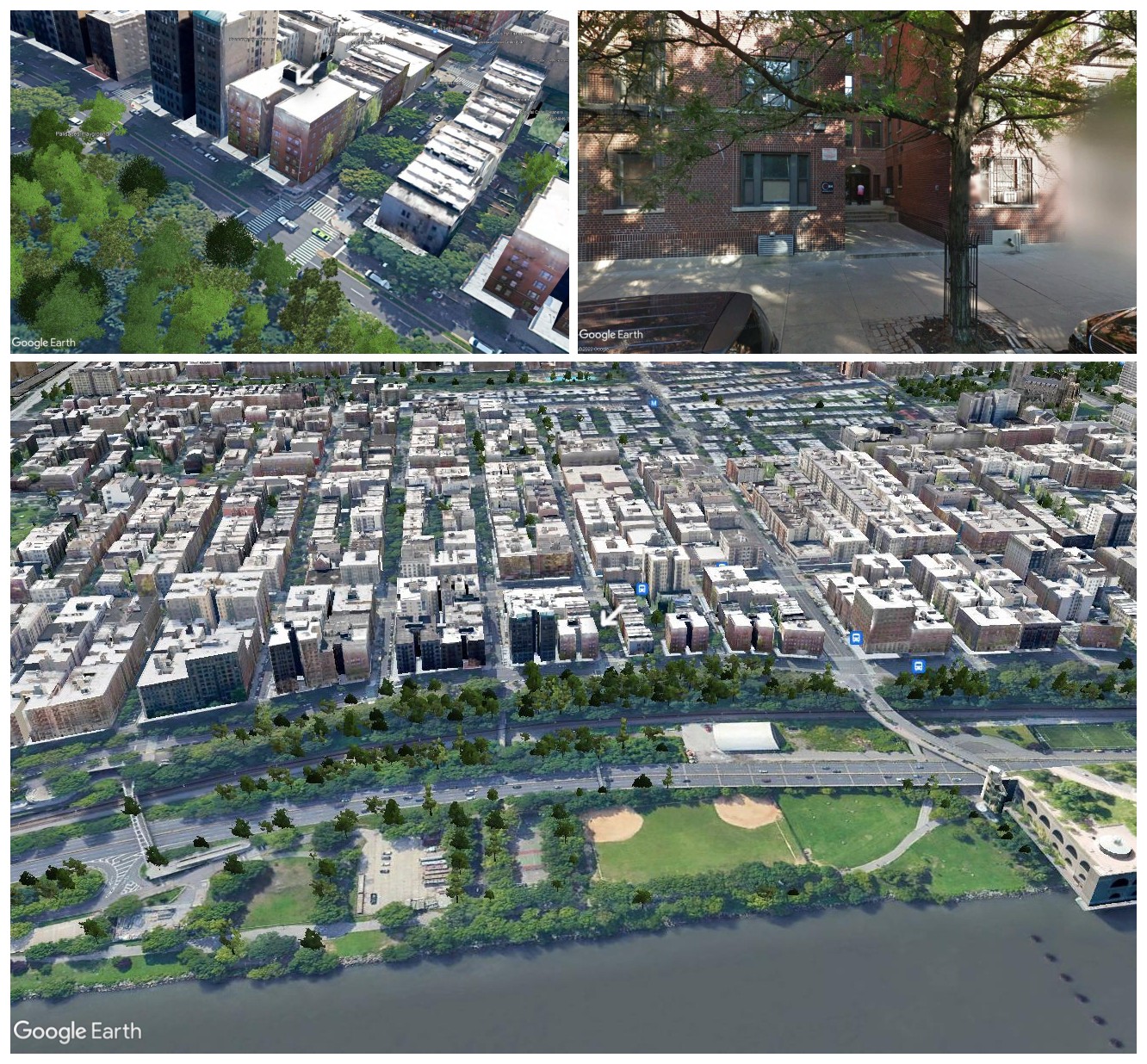
During their crisis with immigration, Walter and Elise may have had immediate help from their nephew, Karl Kirschbaum, who is designated in column 23 on the manifest as their relative with the address of 700 Riverside Drive N.Y.C. Hotel St Moritz is also written in the column, their desired New York address during their stay.
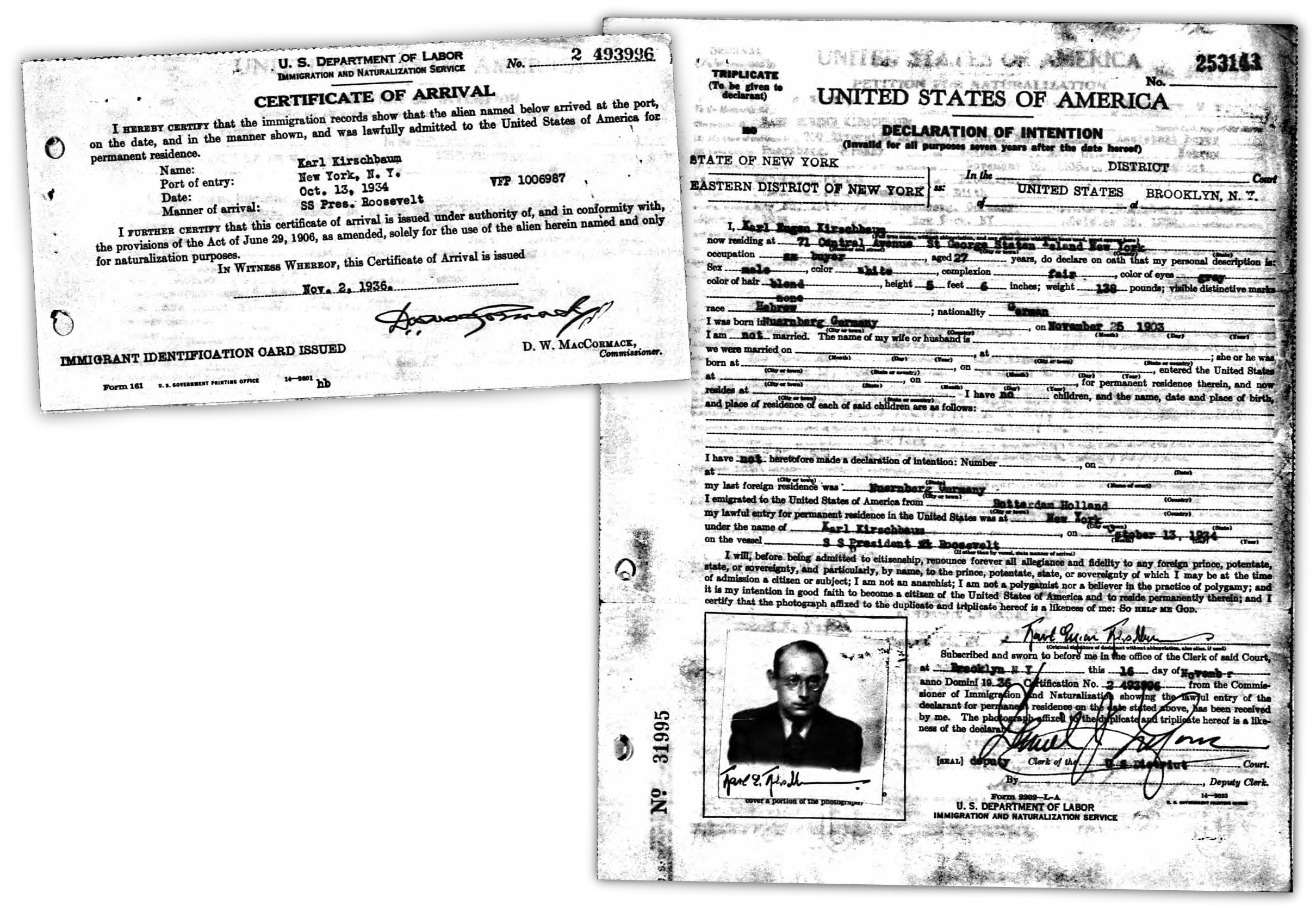
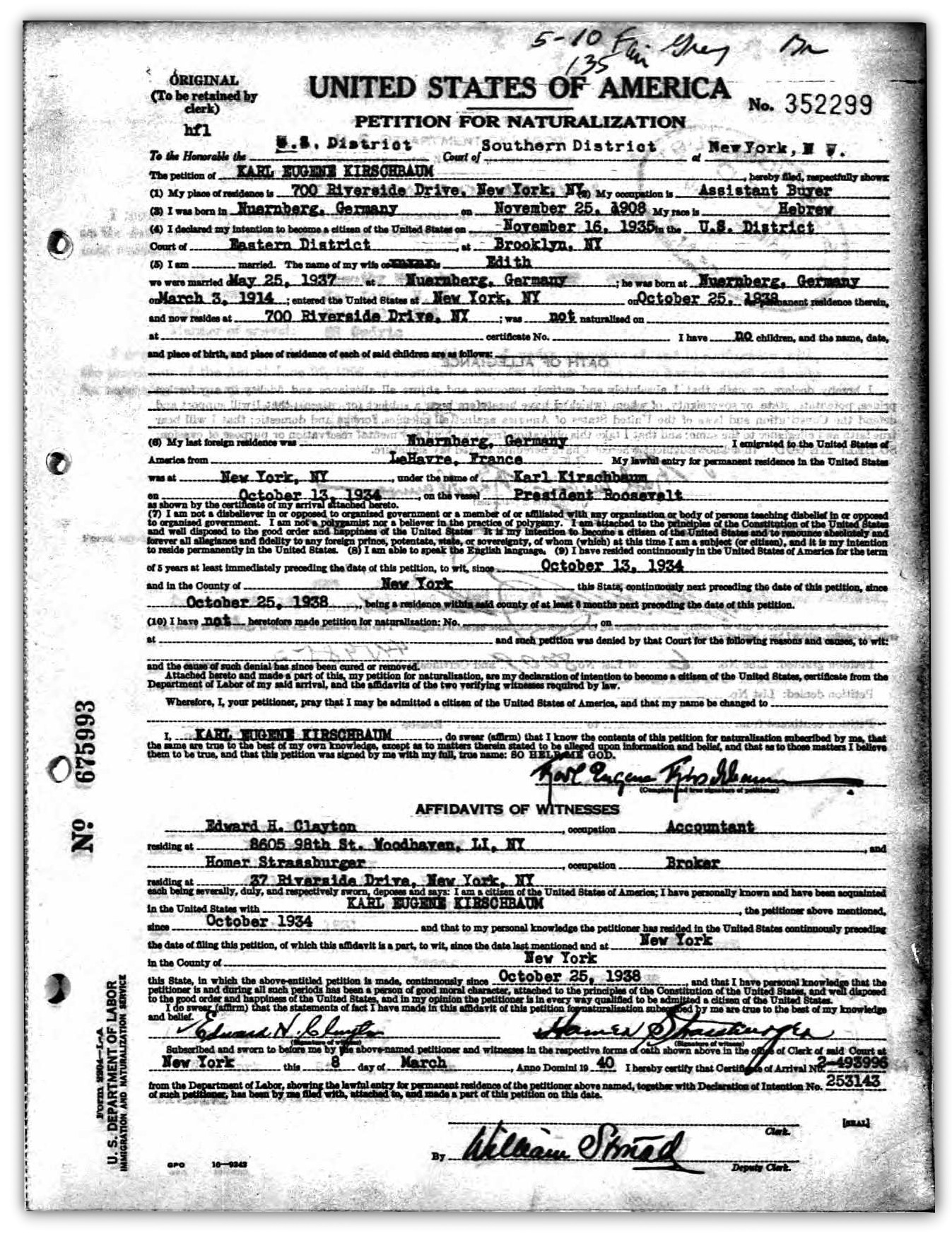
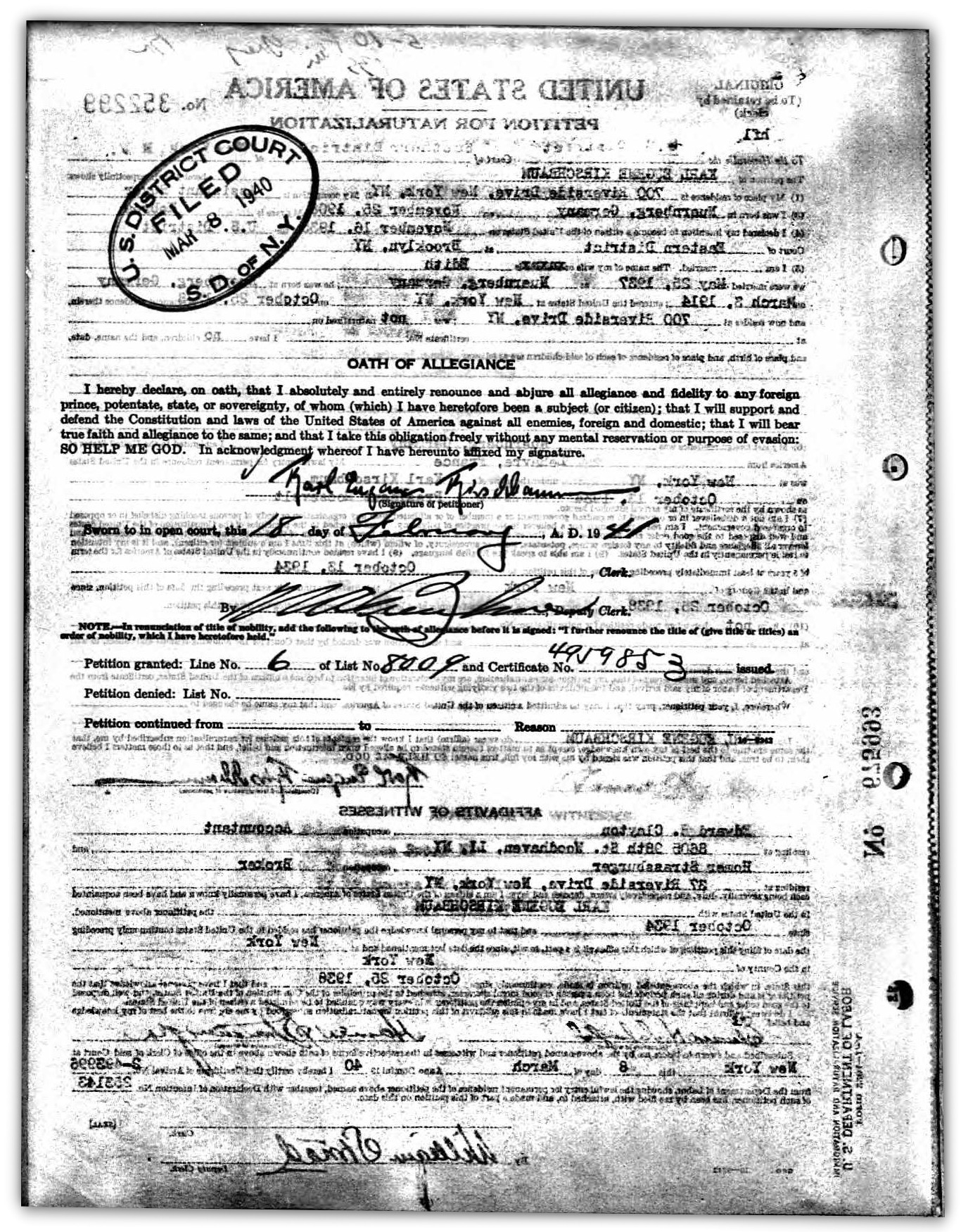

Karl's 'first papers' are above. His Declaration of Intention for citizenship is dated October 13th 1934. His Petition for Naturalization is dated 16th November 1935. His Certificate of Arrival records 2nd November 1936. Karl married Edith Gerst on 25th May 1937. Edith was born on 3rd March 1914 (see Charles P Stanton's chart). The family link to Walter is Edith's mother, Gertrude (Tuchmann) Gerst, Walter's sister. Karl swore his Oath of Allegiance 8th March 1940. An 'e' slipped into Karl's middle name, making it the more American Eugene. Karl was in the shoe business.
During the 1930s and 1940s before the USA entered WW2 in December 1941 with the attack on Pearl Harbor, Karl was well-travelled between Europe and the USA, taking many sea voyages. On 17th September 1944, the Kirschbaums became parents to Barbara Ann in New York. There will be more details about the Gerst Family below.
Hotel St Moritz
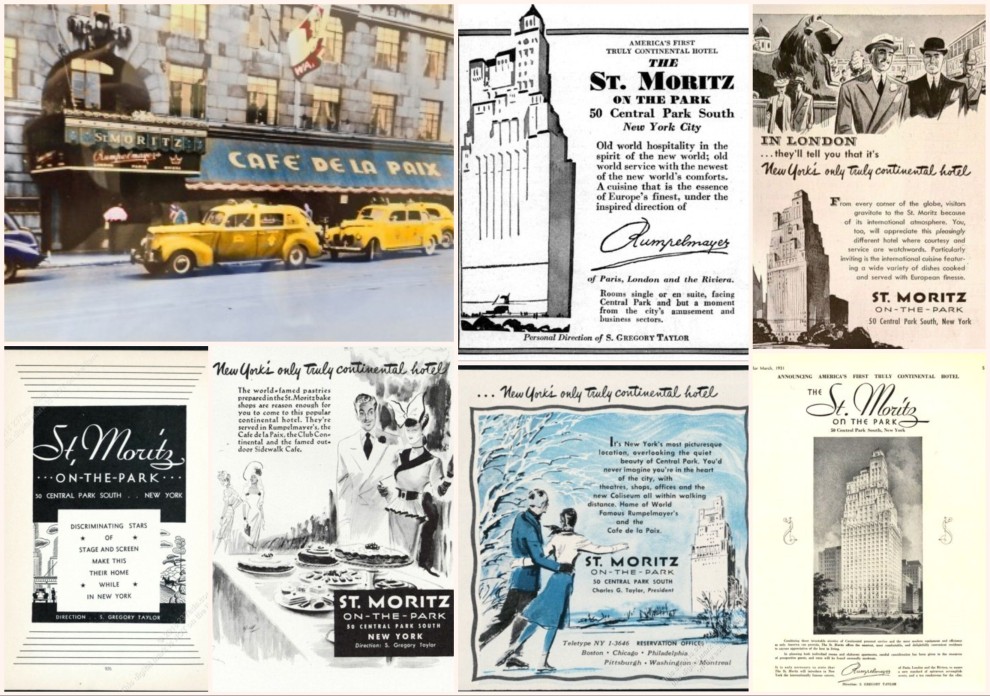
It would be gratifying to know for certain that Walter and Elise were able to spend some time in the unadulterated luxury of their designated stay noted on the manifest of the SS Vendeem; the Hotel St. Moritz, overlooking Central Park. Following their expensive scare with the immigration services, I'm hoping that they were able to sample the culinary delights of the famous Rumpelmayer Café within.
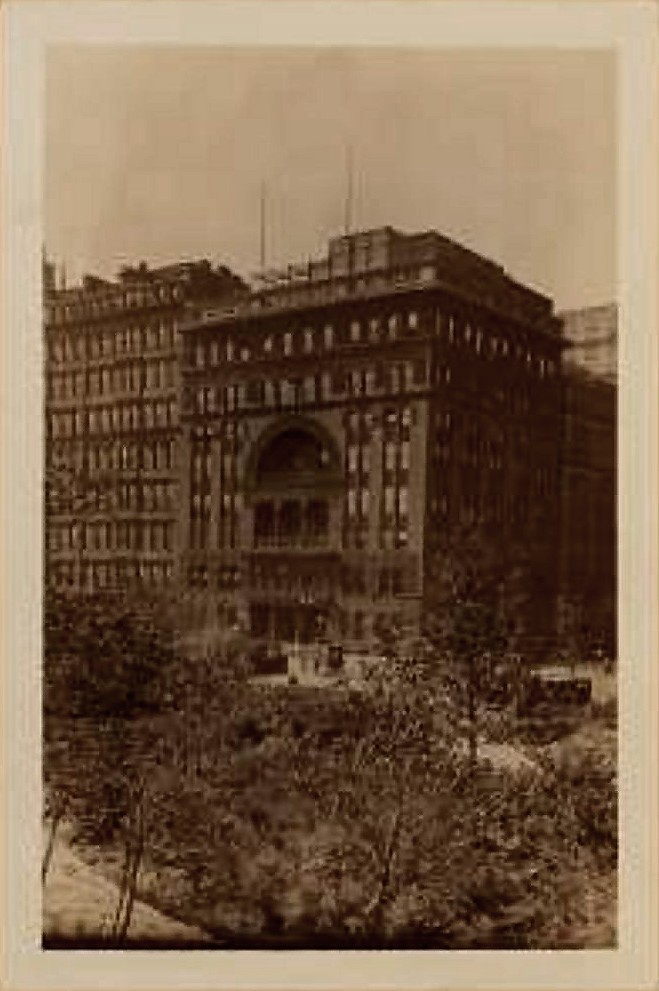 (Photograph of the New York Athletic Club; the building that preceeded the Hotel St. Moritz).
1928
New York Athletic Club, 59th Street at S.E. corner of Sixth Avenue. This will soon be demolished for the construction of the Hotel St. Moritz, while the new Athletic Club building will replace the Spanish Flats, on the S.E. corner of Seventh Avenue and 59th Street.
May 25, 1928.
P.L. Sperr.
Irma and Paul Milstein Division of United States History, Local History and Genealogy, The New York Public Library. "Manhattan: 59th Street ‐ 6th Avenue" The New York Public Library Digital Collections. 1928. Digital Collections
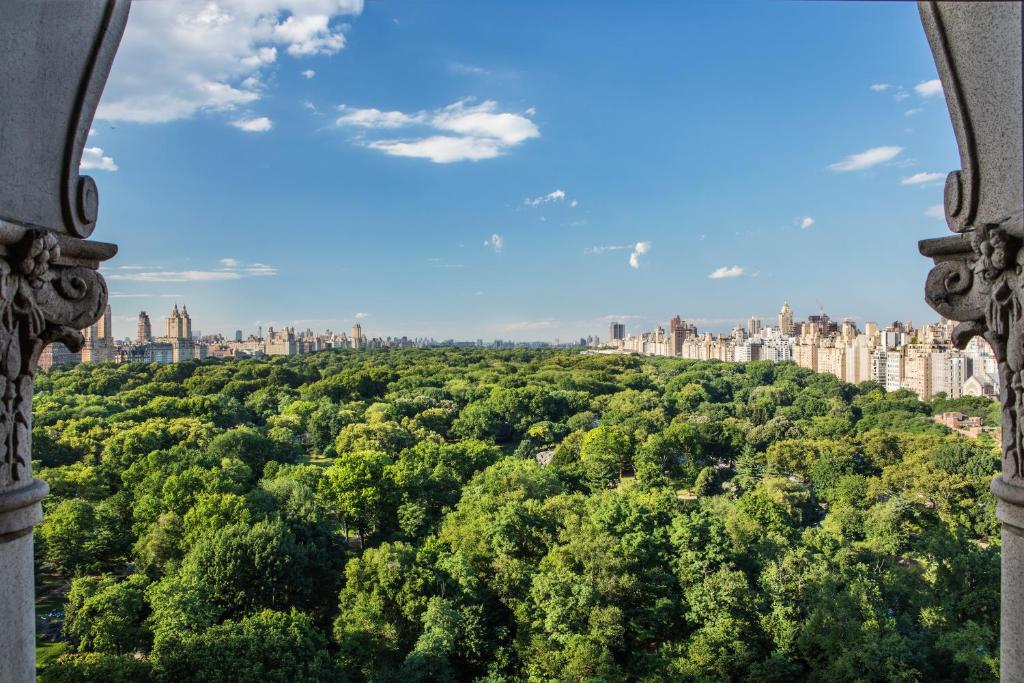
Originally the site of the landmark St. Moritz Hotel, The Ritz‐Carlton New York, Central Park offers some of the city's most luxurious and elegant accommodations. The 33‐story Emery Roth building features 253 rooms ...
The Ritz Carlton
Hotel St Moritz
The St Moritz ‐ The Life and Death of a Legendary Hotel
Antique Hotels ‐ Hotel St Moritz
The Ritz Carlton
What Next?
1940 ‐ was a dangerous time, especially for Jewish refugees. Did Walter and Elise proceed to Panama?
We have a document to show that Elise passed away in Mexico in 1943 (see below), but I have yet to find the citation for the passing of Walter who, according to all the records I've found to date, died the previous year on 29th March 1942 in Mexico.
Perhaps after their 60 day stay in New York they were able to get to their (in transit) destination of Panama if their Panamanian passports were, after all, considered valid for further travel. Elise's 1943 Mexican death certificate gives "Panamanian by Naturalization" as her nationality so the validity theory seems likely. However, there were many geo-political problems in Latin America since 1939 and Panama had elected the hostile fascist President Arnulfo Arias in 1940. Regarded as pro‐nazi by the Allies, he held the US requested 999‐year leases for the Panama Canal Zone and lands to ransom.
On February 13, 1941 the US Secretary of State, Cordell Hull, issued the following statement: "...an international conflagration has broken out bringing with it the existence of a threat to the security of the Panama Canal which requires the taking of measures for the defense of the canal on the part of the Government of the United States.
On February 18, the Panamanian government issued a memorandum that made specific demands in exchange for the base leases. On October 7th 1941, a bloodless coup removed Arias from power. "With Ricardo Adolfo de la Guardia as the new president, the defense site negotiations moved forward quickly and positively for the United States. Then the Japanese attacked the American naval base in Hawaii, which accelerated the process of negotiations even more. The new Panamanian government declared war on Japan on December 7, 1941, on the same day of the attack on Pearl Harbor, and a day before the United States officially entered the war. Panama then declared war on Germany and Fascist Italy on December 13, 1941, along with a few other Latin American states."
Panama and the United States Relations
Panama during World War II
Panama Canal
Latin America
Refuge in Latin America
The United States and the fascist threat in Latin
America during World War II
The U.S. Government Turned Away Thousands of Jewish Refugees, Fearing That They Were Nazi Spies
Jewish Internees in the American South, 1942-1945, Harvey Strum
Mexico
Mexican registration as a foreigner
Mexico, Gilberto Bosques and the Refugees
Katz, Friedrich. “Mexico, Gilberto Bosques and the Refugees.” The Americas, vol. 57, no. 1, 2000, pp. 1–12. JSTOR, http://www.jstor.org/stable/1007709. Accessed 22 Sep. 2022.
Exploring Mexican Judaism
History of the Jews in Mexico
The Jewish Migration to Mexico during Nazi Germany, Published February 2021
Mexico became an active belligerent in World War II in 1942 after Germany sank two of its tankers. The Mexican foreign secretary, Ezequiel Padilla, took the lead in urging other Latin American countries to support the Allies as well.
Walter passed away in Mexico City on 29th March 1942 and 14 months later Elise Tuchmann passed away in Mexico City on 21st May 1943. RIP.
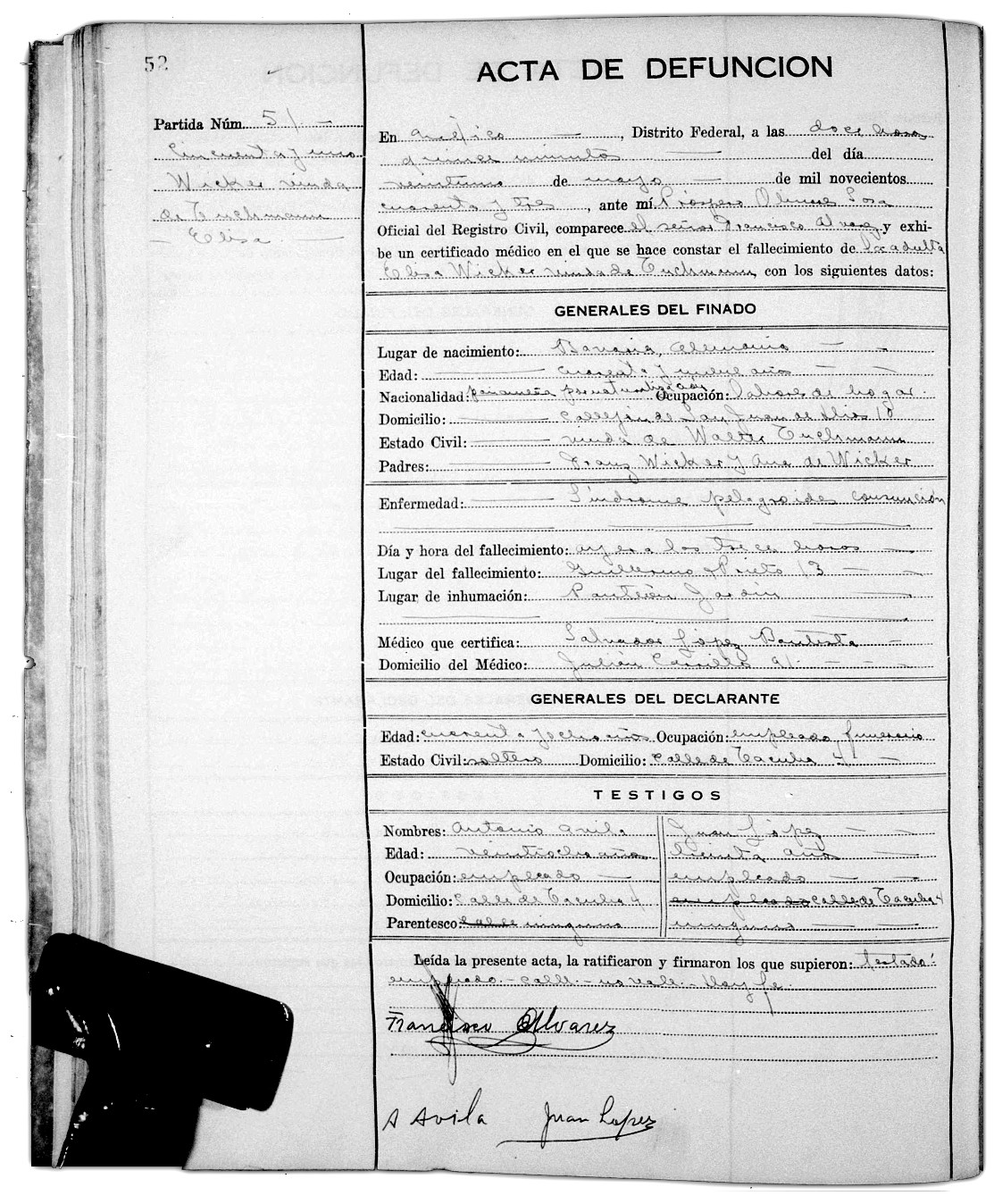
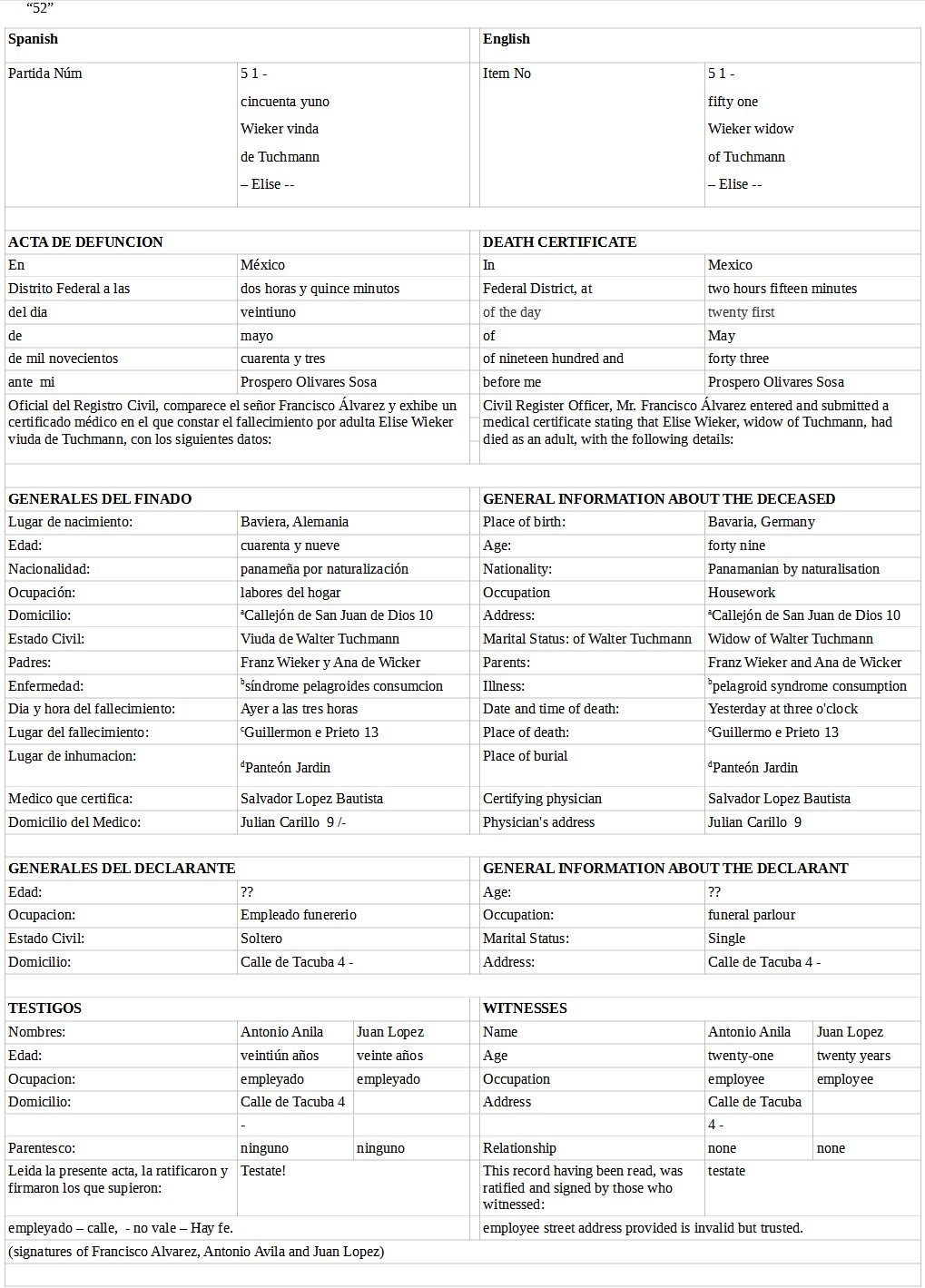
Below is a translation of the content of the death certificate for Elise, from Spanish to English. Copy of the original certificate is available from the genealogical web sites under ‐ Federal District, Mexico, Civil Registration Deaths, 1861-1987
Mexico City
Elisa Wieker in the Federal District, Mexico, Civil Registration Deaths, 1861‐1987
Name: Elisa Wieker
Gender: Mujer (Female)
Age: 49
Birth Date: abt 1894
Death Registration Date: 21 may. 1943 (21 May 1943)
Death Registration Place: México, Distrito Federal, México (Mexico)
Father: Franz Wieker
Mother: Ana de Wicker
Spouse: Walter Tuchmann
Archivo de Registro Civil de Distrito Federal (Civil Registry Archives); Federal District, Mexico
Year: 1943
| Name | Elisa Wieker |
| Sex | Female |
| Age | 49 |
| Event Date | 21 May 1943 |
| Event Place | Cuauhtémoc, Ciudad de México, México |
| Event Place (Original) | Cuauhtémoc, Distrito Federal, México (Mexico) |
| Event Type | Death Registration |
| Death Place | México, Distrito Federal, (Mexico) |
| Birth Year (Estimated) | 1894 |
| Father's Name | Franz Wieker |
| Mother's Name | Ana de Wicker |
| Spouse's Name | Walter Tuchmann |
| Spouse's Sex | Male |
| Page | 52 |
| Registration Number | 51 |
Summary of Death Certificate index
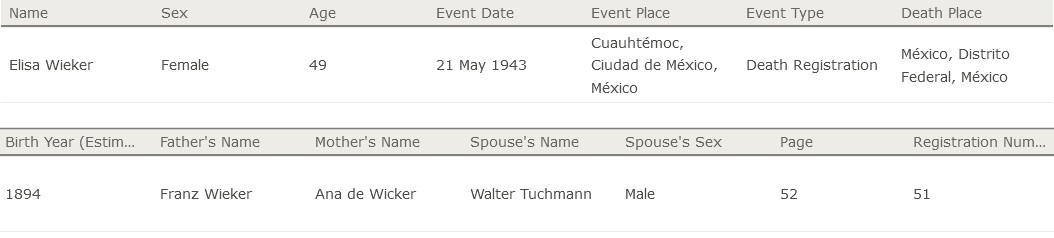
A transcription and translation from Spanish to English of the Death Certificate of Elise Wieker.
Archivo de Registro Civil de Distrito Federal (Civil Registry Archives); Federal District, Mexico
ancestry.com link
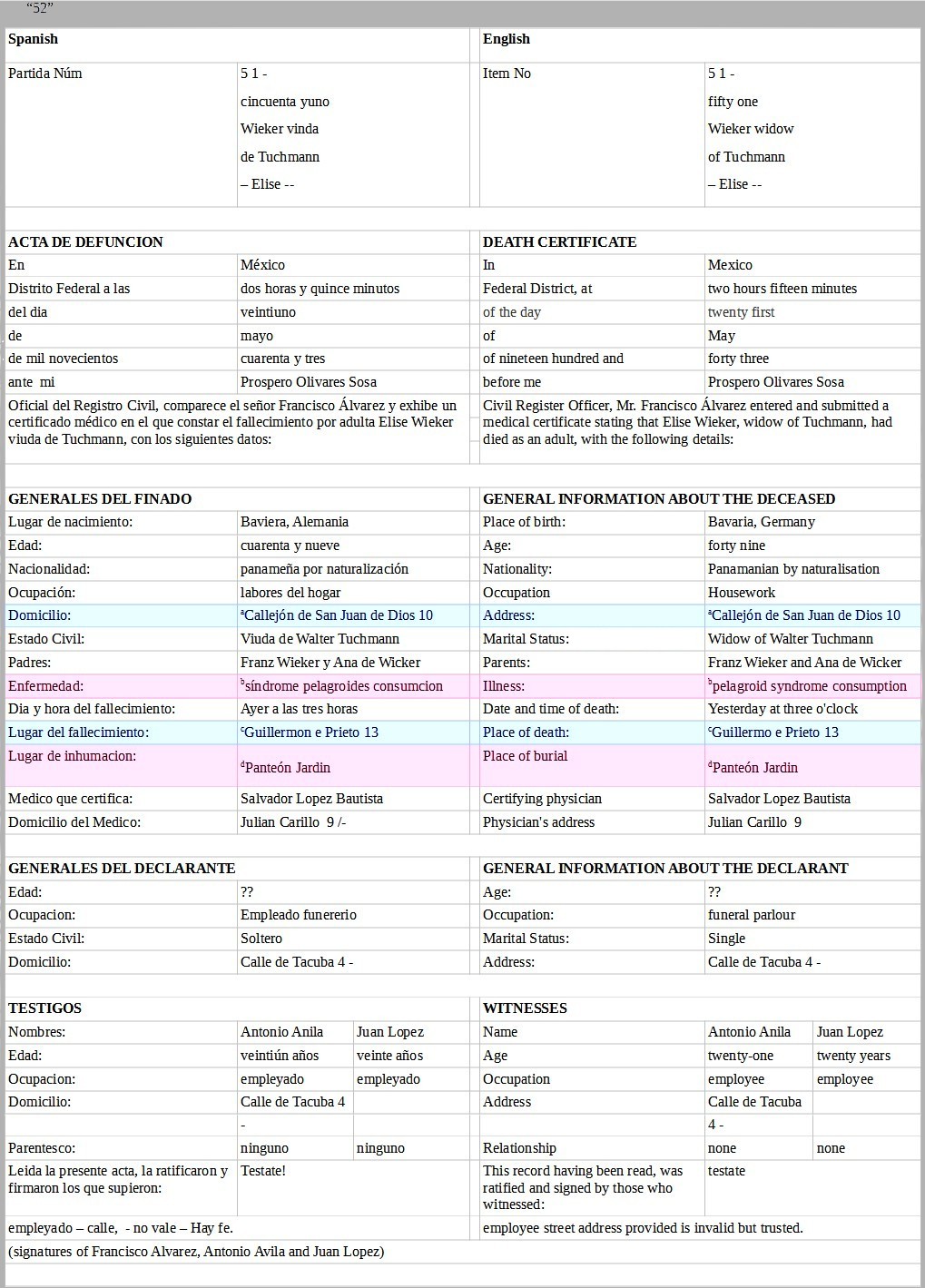
a Tuchmann Residence in Mexico City 1943
1er Callejón San Juan de Dios address
Centro Histórico de la Cdad. de México, Guerrero
06300 Ciudad de México, CDMX
Mexico
Segundo Callejón San Juan de Dios address
Centro Histórico de la Cdad. de México, Guerrero
Ciudad de México, CDMX
Mexico
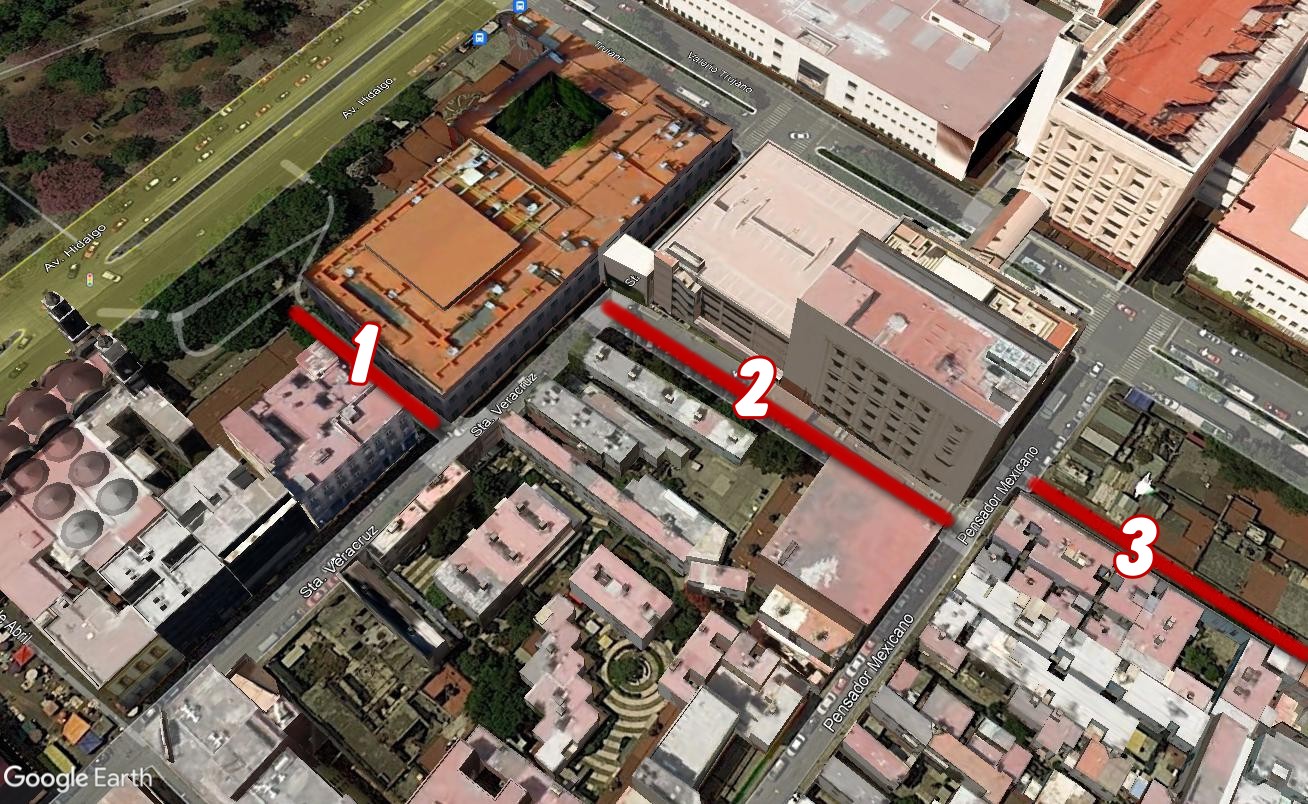
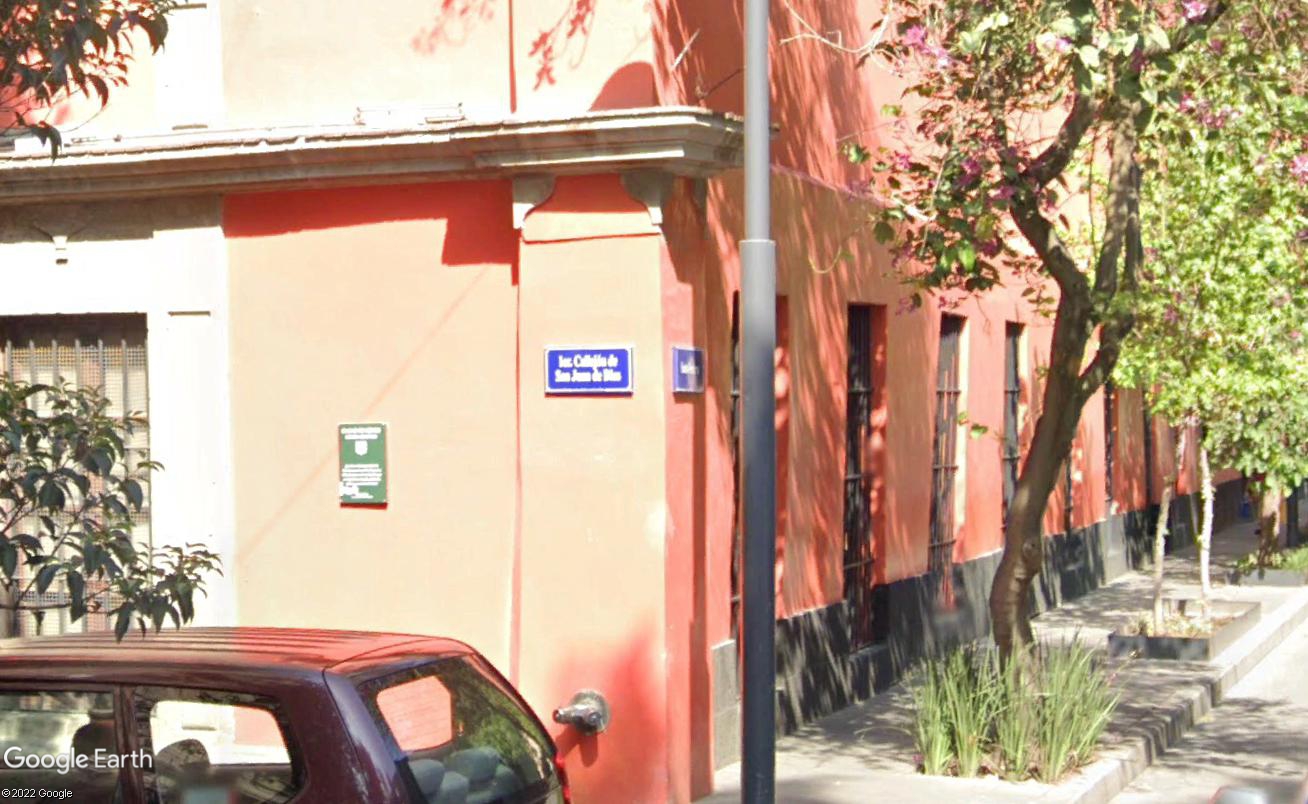
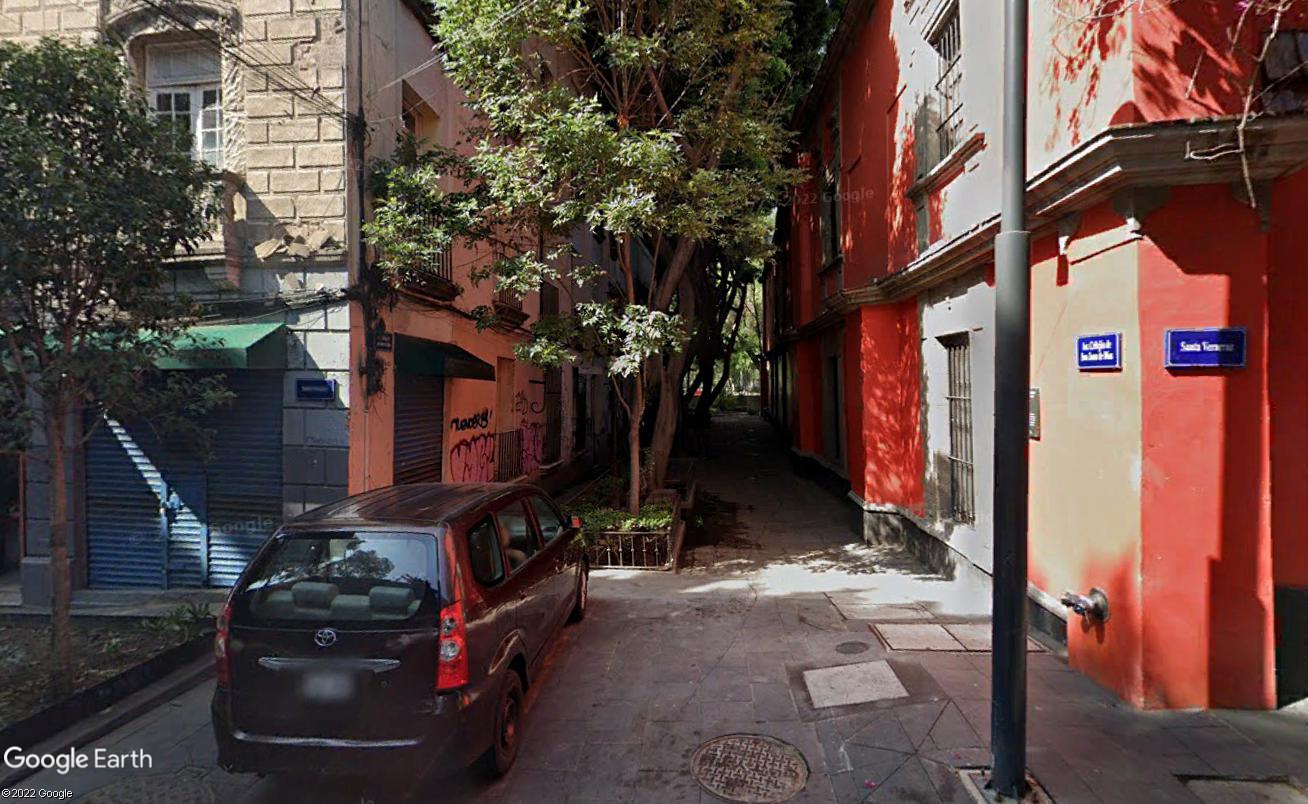
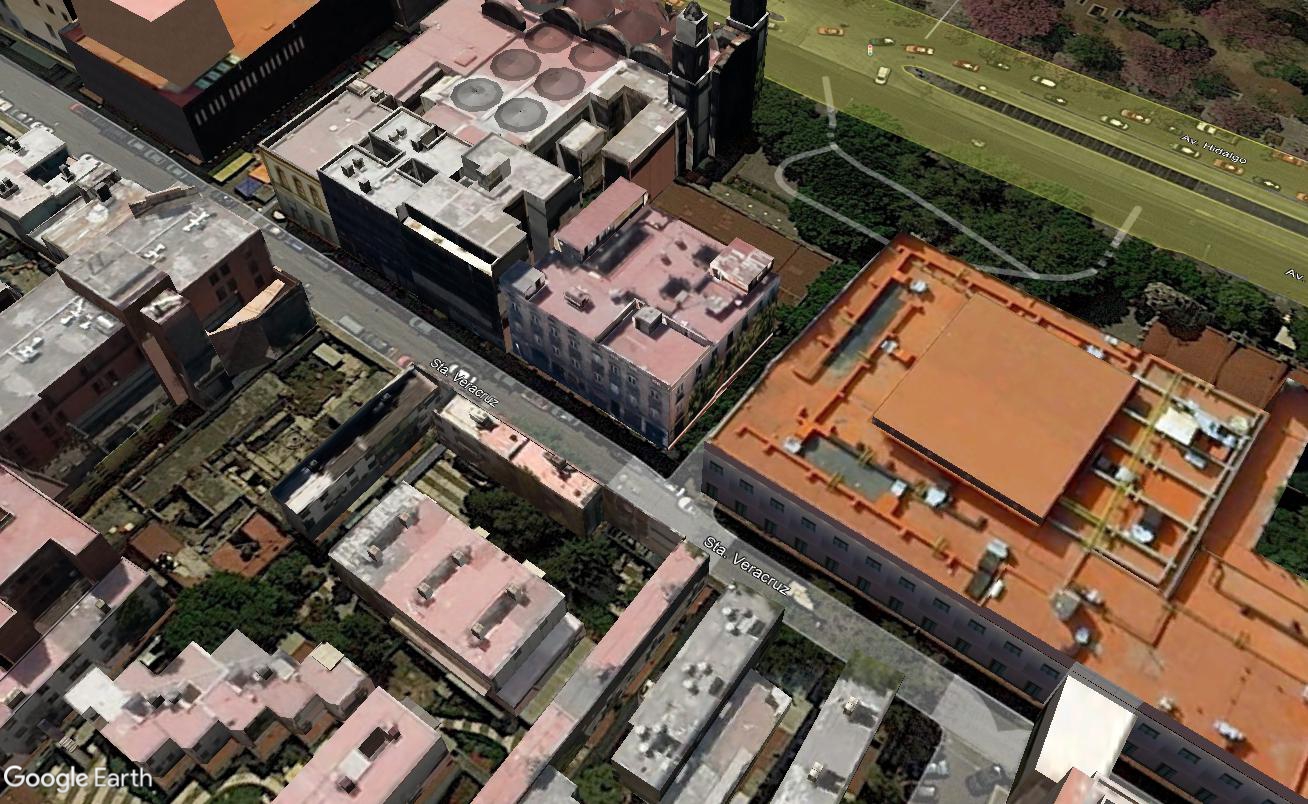
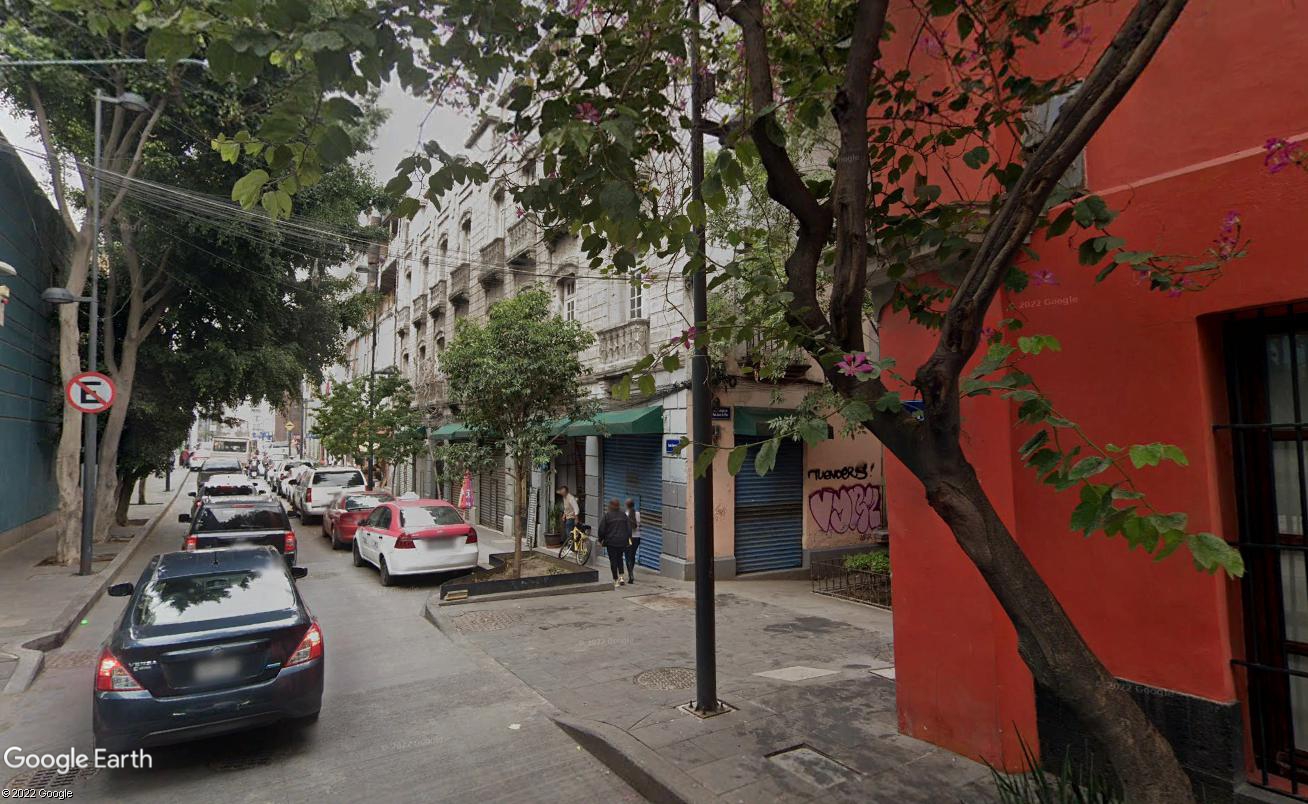
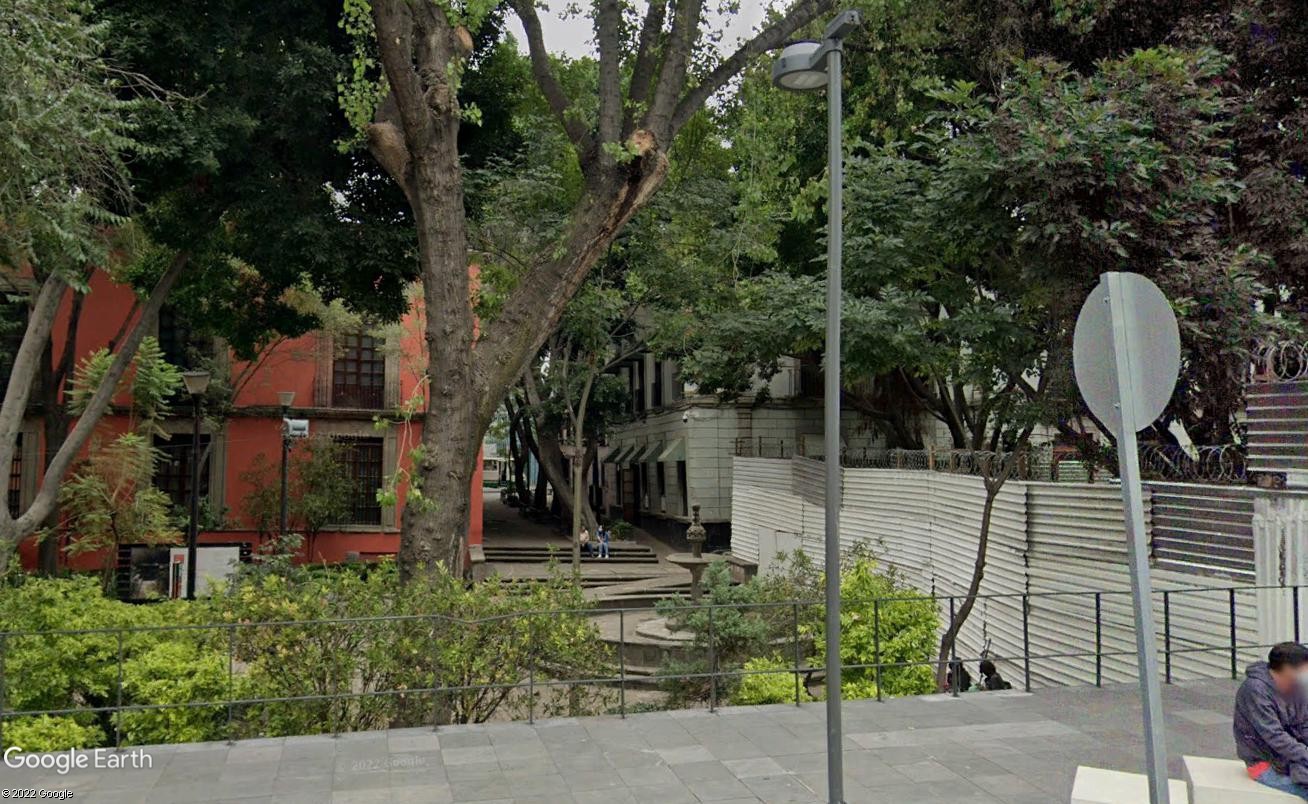
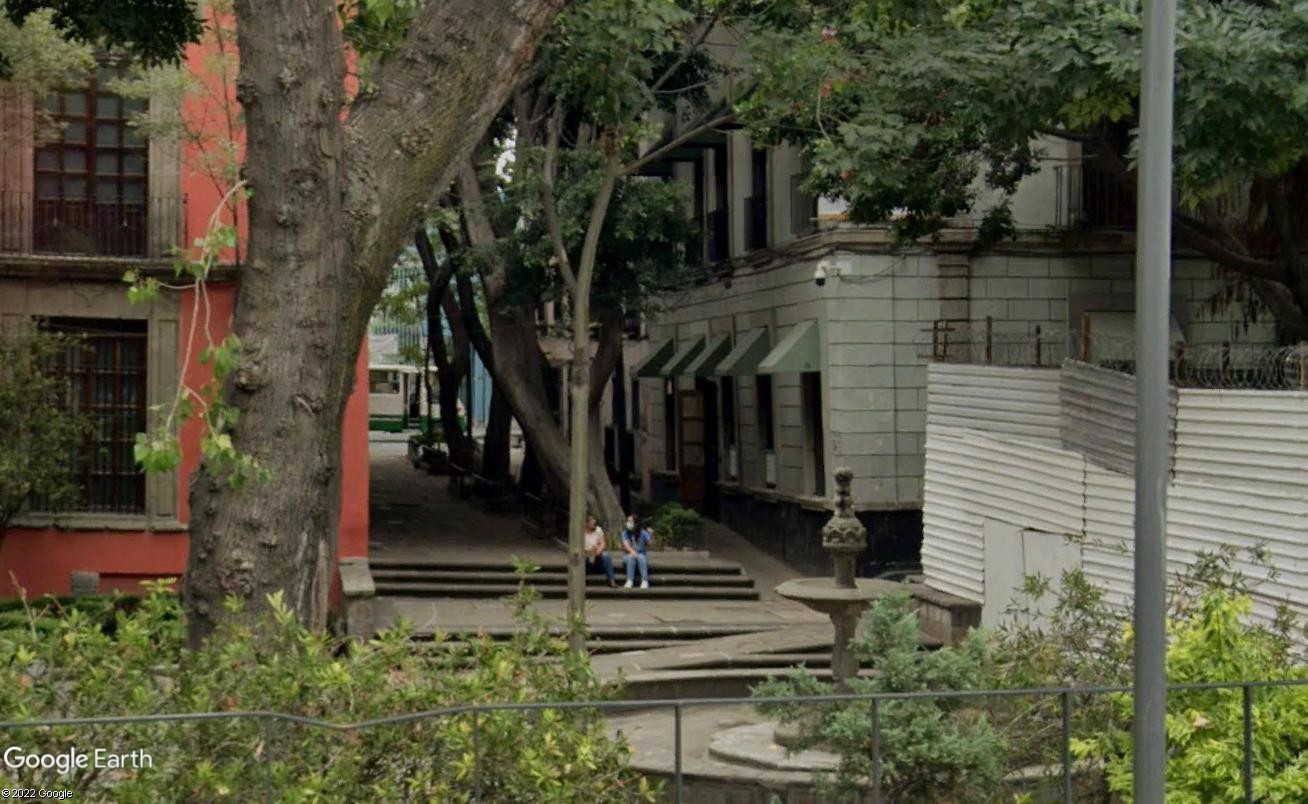
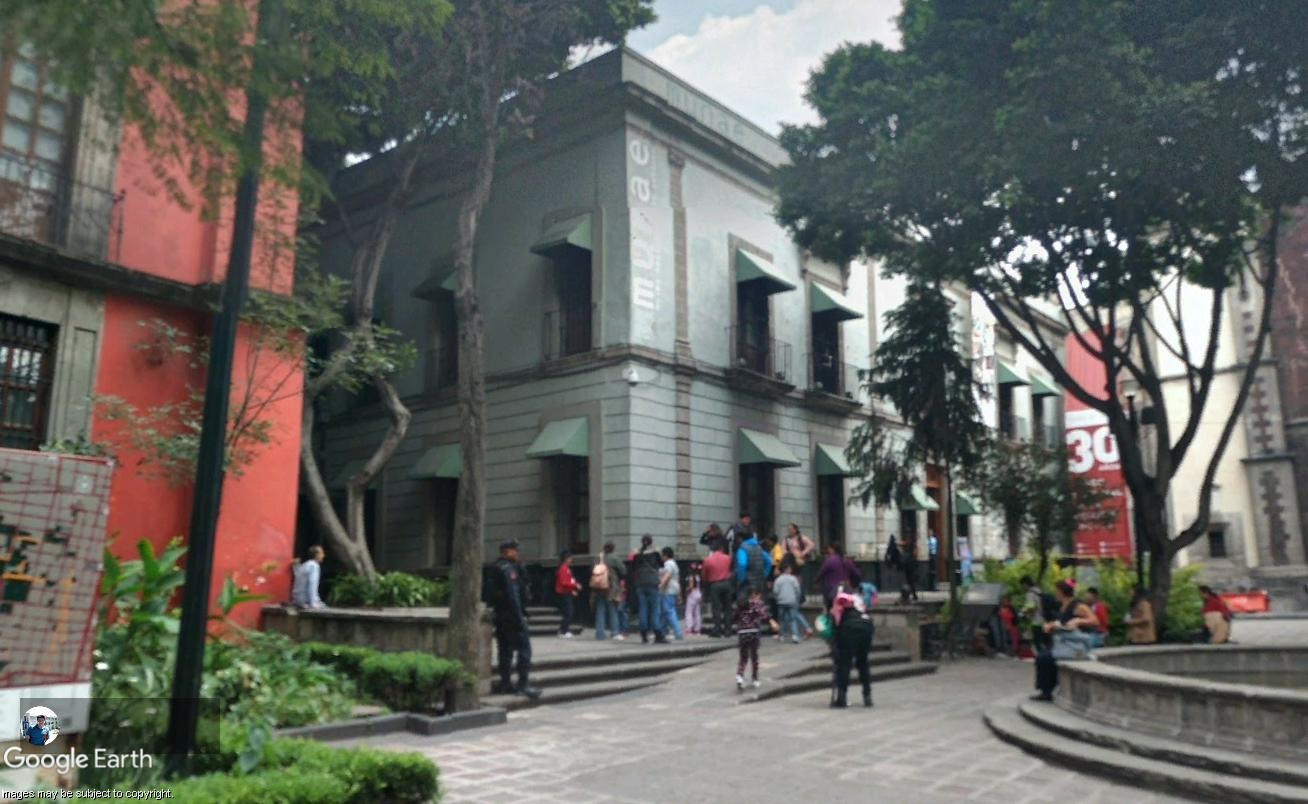
There are three throughways, each known as Callejó San Juan de Dios in the area the first seems the most likely as there is an apartment building on the other side of neighbouring The Franz Mayer Museum.
b Medical condition of Elise
assumed to be 'Consumed by Pelegra Syndrome'
https://medlineplus.gov/ency/article/000342.htm
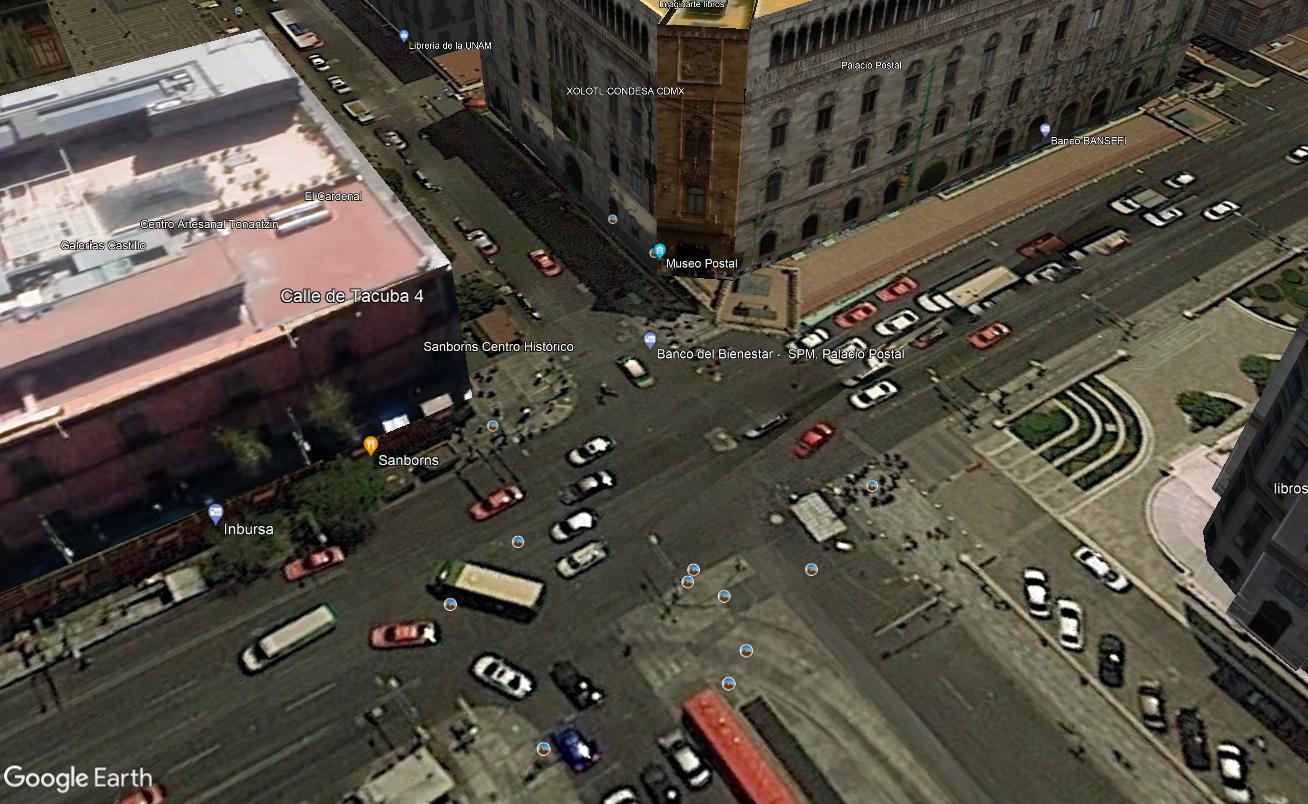
c Place of Death
Guillermo e Prieto 13
This area is about two and a half miles from 1er Callejon Juan de Dios and a look in Google Earth © shows garden market areas and
small shops in this year 2022. Also here, below are photographs of the Physician's address and the area where the Funeral Parlour
has been described as dubiously situated: Calle di Tacuba 4. ©Google Earth


d Panteon Jardin cemetery
As Walter Tuchmann also passed away in Mexico City, it seems likely that he also is buried here with Elise in the Panteon
Jardin cemetery. Phillip "Walter" Tuchmann died on March 29, 1942, in Mexico when he was 51 years old.
Parque las Águilas
Ciudad de México, CDMX
Desierto de los Leones km 14.5, San Ángel Inn, Álvaro
Obregón, 01060 Ciudad de México, CDMX, Mexico
Wikipedia Panteon Jardin cemetery
The cemetery has a Jewish section named La Fraternidad.
Day of the Dead in Mexico City
Flickr Photographs
Cemetery Address: ALTOS LERMA SIN NUMERO PUEBLO DE SANTA LUCIA SANTA FE DELEGACION. ALVARO OBREGON MEXICO D.F.
Contact Info: DENNY AMIGA AMIGA dennyamiga@gmail.com PRESIDENT OF THE HEBRA KADISHA COMMITTEE Data provided courtesy of
HEBRA KADISHA. COMUNIDAD MAGUÉN DAVID. Thanks also to Liz Hamui Sutton for arranging the submission of information.

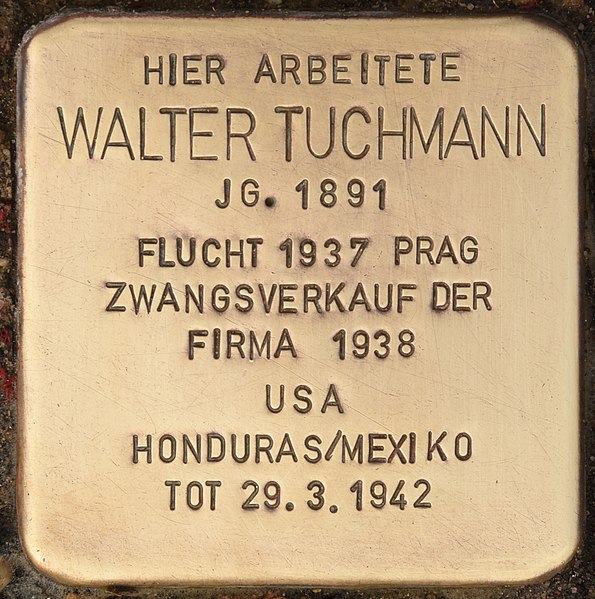
Stumbling Stones
Known as "Stolpersteine", or "stumbling stones", there are now more than 70,000 such memorial blocks laid in more than 1,200 cities and towns across Europe and Russia. Each commemorates a victim outside their last‐known freely chosen residence.
The stones represent a new vision of urban remembrance. "If Eisenman's large monument, set in the governmental heart of Berlin, emphasises the scale and political culpability of the Holocaust, the Stolpersteine focus on its individual tragedies".
The inscription on each stone begins "Here lived", followed by the victim’s name, date of birth, and fate: internment, suicide, exile or, in the vast majority of cases, deportation and murder.
https://en.wikipedia.org/wiki/Stolperstein
https://stumblingstones.ca/
An e‐mail from Melanie Greiner to genealogist Daniel Föhl dated 16.3.2014:
Dear Mr Föhl,
Mr Walter Tuchmann was a patron in Schwabach and a very respected man before 1933.
His stumbling block was donated by the pupils of the Sonderpädagogisches Förderzentrum, children with learning difficulties
and slight disabilities, who created a dignified memorial to Mr. Tuchmann.
You can find some articles about this in the Schwabacher Tagblatt.
After 1933, Mr. Tuchmann was accused of alleged currency trading and racial defilement, he fled to Prague after the people of
Schwabach made his life incredibly difficult. That was in 1937, at the beginning of 1938 he sold his factory from Prague through
his lawyer for very little money to:
Richard Schmauser, Herbert J. Schmauser and Dr. Ing. Otto Wiedemeyer.
Tuchmann Walter born 28.03.1891 in Nuremberg, factory owner of the Drei‐S‐Werke in Schwabach Northern
Ringstrasse 14
Place of residence Nuremberg End of July 1937 Escapes to Prague
05.04.1939 Escape to the USA
Honduras (Consul)
died 29.03.1942 in Mexico
See also:
http://www.nordbayern.de/region/schwabach/nachruf-auf-das-drei-s-werk-1.4210225
&:
http://www.stolpersteine-schwabach.com/bio.html
A Translation to English: Nordbayern Schwabach
Stumbling Stones

Malachy McCauley September 2022 Philippines